Feng Shui Symbols Explained: Understanding the Objects Before You Choose
Objects sold as feng shui symbols can carry very different meanings. A ruyi scepter, a fish motif and a Laughing Buddha figure each have their own context. Understanding the object first helps you choose a piece you appreciate, instead of buying a supposed solution to every concern.
Feng shui is broader than decorative objects
The University of Washington’s Chinese civilization resource describes feng shui as a practice concerned with people, their living spaces and the natural environment, using tools including compasses and almanacs. A shop’s list of ornaments therefore represents only a small part of a much broader subject.
Auspicious imagery and feng shui are also not identical. A motif can express good wishes in Chinese art without prescribing a universal location in your home. It is useful to separate three questions: what the symbol means, how a particular tradition uses it, and whether the actual piece suits your room.
Ruyi: a good-wishes object
The ruyi scepter has an established auspicious association. Its name means “as you wish,” according to the National Museum of Asian Art. That makes it a considered motif for someone who enjoys the idea of expressing encouragement through an object.
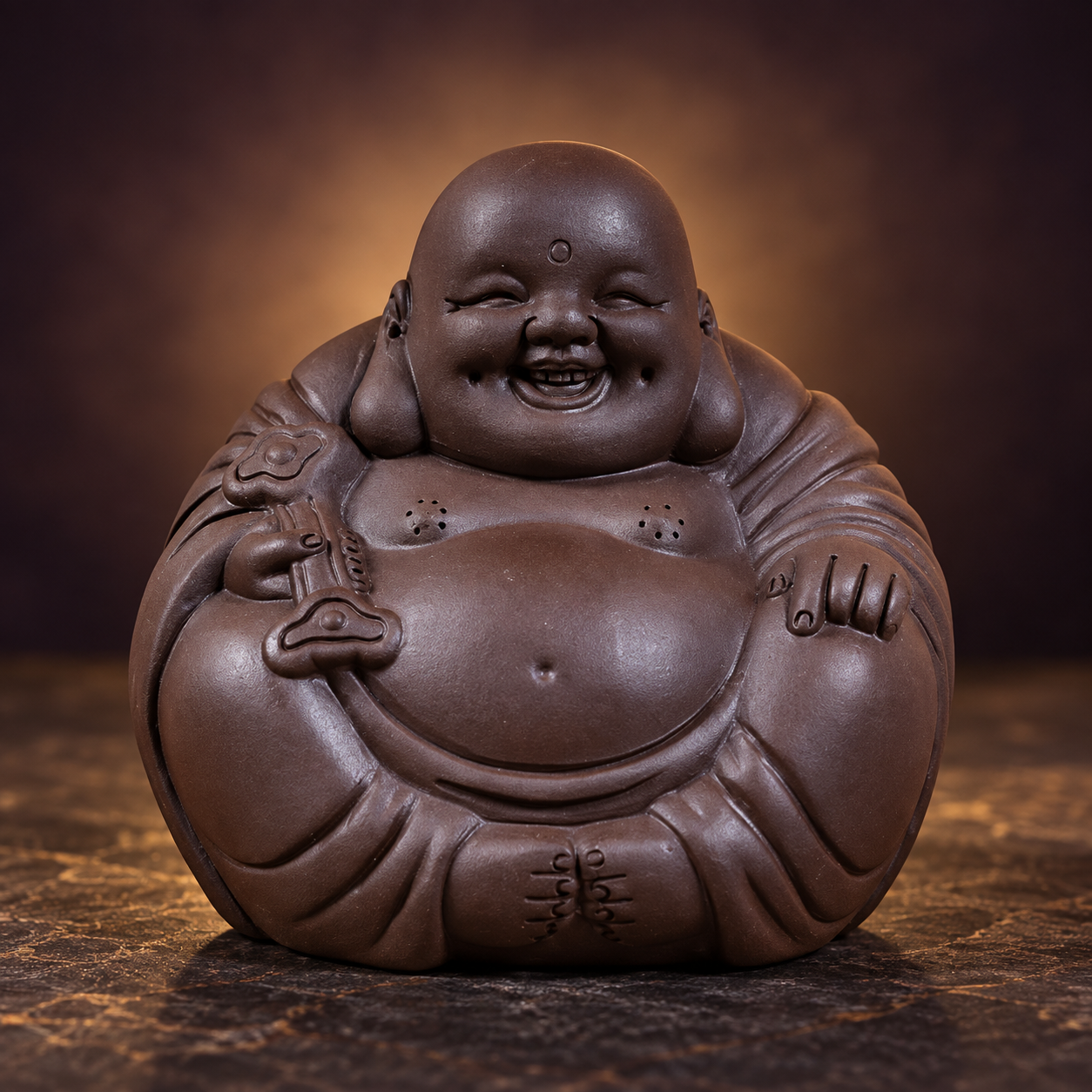
Our Ceramic Laughing Buddha with Ruyi combines that detail with Budai’s familiar expression. The scepter sits across the chest, and the dark-brown ceramic figure is approximately 2.95 inches high. It offers a compact way to enjoy the motif on a shelf or desk where you can actually see it.
Fish: an auspicious image of abundance
Fish can convey abundance in Chinese art through a wordplay between yu, fish, and abundance. The Smithsonian’s interpretation of Fish and water-weeds explains that connection. This is a documented meaning of the motif, rather than evidence that a fish-shaped ornament produces wealth.
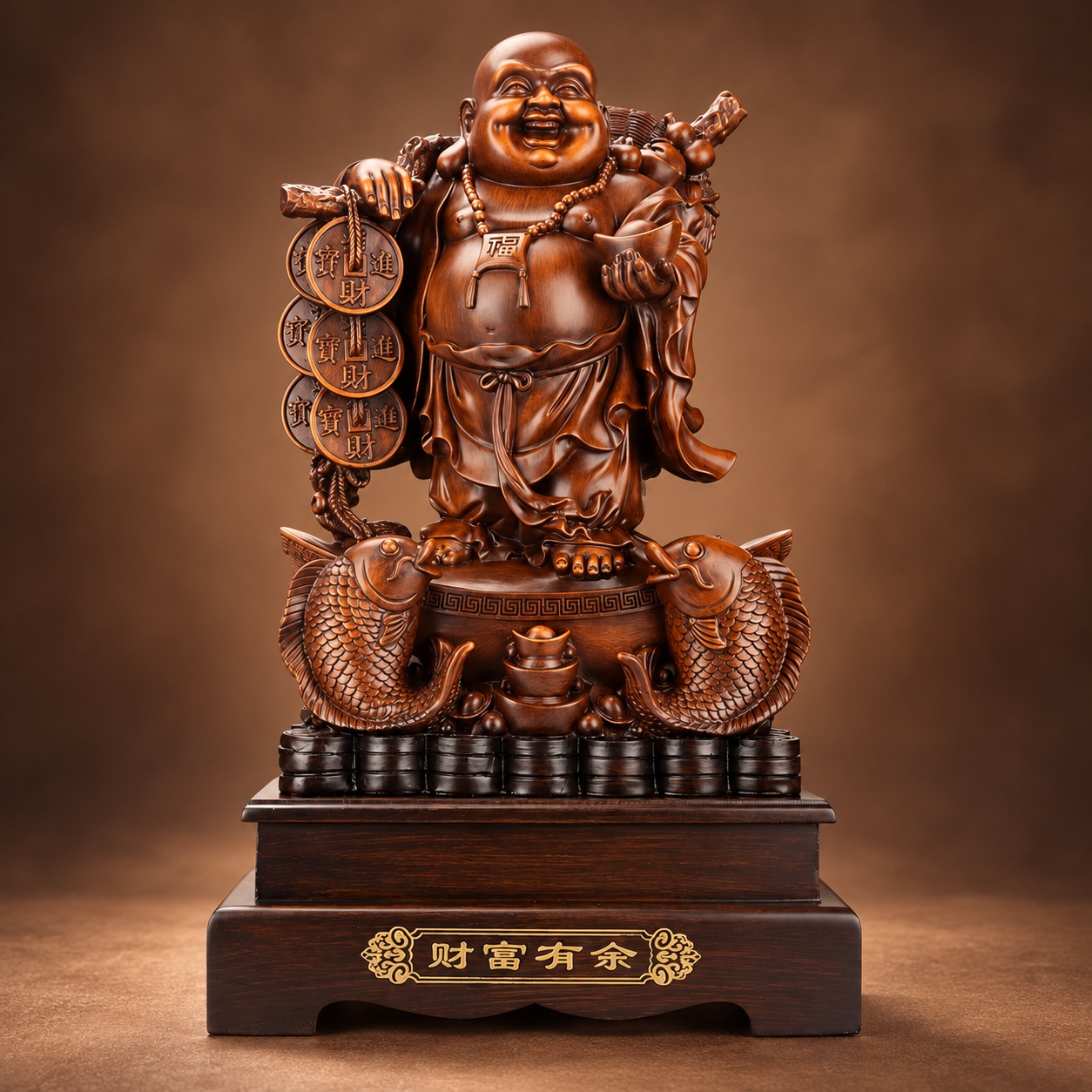
For a room that can accommodate a more detailed sculpture, our Laughing Buddha with Fish Pair makes the fish part of the full scene. The approximately 9.06-inch figure stands on a fish-pair base. Its bronze-colored finish is on resin, so the listing’s material description remains important even if the photograph suggests metal.
Laughing Buddha: identify the figure
Budai is the figure commonly called the Laughing Buddha. His smiling expression and exposed belly distinguish him from many other Buddhist images. When he appears with a bag, ingot, fish or scepter, those objects add details to the composition.
Our guide to Laughing Buddha designs explains those visible differences. Understanding the design is a more reliable first step than choosing from a claim that one pose is “best” for every home.
Compasses and bagua imagery are different kinds of objects
You may also encounter compasses or diagrams in feng shui discussions. These have roles within interpretive systems rather than simply serving as ornaments. If you want to use them as part of a practice, learn the system from a knowledgeable practitioner instead of following an isolated shopping caption.
For the same reason, be cautious about combining instructions from unrelated sources. A recommendation about one school’s approach cannot automatically be applied to another, and a short decorative guide cannot assess every home’s orientation or circumstances.
Choose the room setting with care
Start with the everyday setting: a stable surface, a clear view and enough space around the sculpture. Check that the base fits comfortably and that normal movement through the room will not put the piece at risk. Follow the listing’s indoor-use and care guidance.
If placement has religious or traditional significance for you, use guidance suited to your own practice. If you are choosing decor, a clean, considered display is a practical way to show appreciation. You do not need to rearrange your entire home to enjoy a meaningful object.
A useful checklist before buying
- Identity: can you name the figure or object shown?
- Meaning: is the interpretation documented, personal or a seller’s unsupported promise?
- Practice: are you buying decor, or an object you intend to use in a particular tradition?
- Physical fit: do the dimensions and care needs suit the intended surface?
For the narrower question of displaying a Budai statue, continue with our Laughing Buddha placement guide. For prosperity-related imagery, our guide to abundance symbolism explores the motifs without promising financial results.
Continue exploring Chinese good luck symbols in art and decor when you are ready for the next decision.