Good Luck Symbols Around the World: Their Meanings and Traditions
A good luck symbol can make a simple wish tangible. A clover on a card, a protective hand in a pendant or a cheerful figure on a shelf can each say “I’m wishing you well.” Their meanings come from different traditions, so the most thoughtful choice begins with understanding the symbol.
What makes an object a good luck symbol?
Some objects have long-standing cultural or religious associations. Others become meaningful through family custom or personal experience: a keepsake from someone who believed in you may feel lucky without carrying an established historical motif.
These are different kinds of meaning, and both can matter to the recipient. Cultural symbolism explains where a design comes from. Personal symbolism explains why you chose it for this person, at this moment. Neither amounts to a guarantee of success.
Four-leaf clover: a familiar wish for good fortune
The four-leaf clover is widely associated with good luck in Western traditions. GIA’s survey of lucky charms distinguishes it from the three-leaf shamrock. If you are choosing a card, print or pendant, count the leaves rather than assuming every clover design means the same thing.
A clover is an approachable choice when you want the wish to be immediately understood. For a farewell or exam-season gift, pair it with a note recognizing the recipient’s preparation and effort. The symbol then supports a specific message rather than standing in for one.
Hamsa: understand the protective context
The hand-shaped hamsa has protective associations in several Middle Eastern traditions. It may appear with an eye in the palm, although designs vary. It deserves more context than the generic label “lucky hand.”
Choose it with attention to the wearer’s beliefs and familiarity with the symbol. A recipient who already values the motif may appreciate a considered design; when you are uncertain, ask rather than assigning them a religious or protective symbol without explanation.
Elephants: a motif with more than one meaning
Elephants appear in auspicious imagery in a number of Asian traditions. GIA discusses associations such as strength and longevity, alongside the distinct religious identity of Ganesha. An ordinary elephant motif and a depiction of a deity are not interchangeable.
Read the object’s description before attaching a meaning. If the recipient loves wildlife, an elephant illustration may be an affectionate personal choice. If your intention is religious, identifying the figure properly matters more than a decorative style rule.
Chinese fish imagery: a wish for abundance
In Chinese art, fish can convey abundance through a wordplay between yu, fish, and a similarly pronounced word for surplus. The National Museum of Asian Art discusses this association in its interpretation of Fish and water-weeds.
A fish motif may therefore suit a wish for a plentiful, enjoyable chapter. The pattern’s other details can add to its meaning. Our guide to objects on Laughing Buddha statues helps you read a combined design rather than treating every symbol in isolation.
Laughing Buddha: a cheerful expression of contentment
Budai, the Laughing Buddha, offers another direction for someone who connects with his familiar smile. The Rijksmuseum associates him with contentment. A figure can express a wish for everyday joy while also being a piece the recipient enjoys looking at.
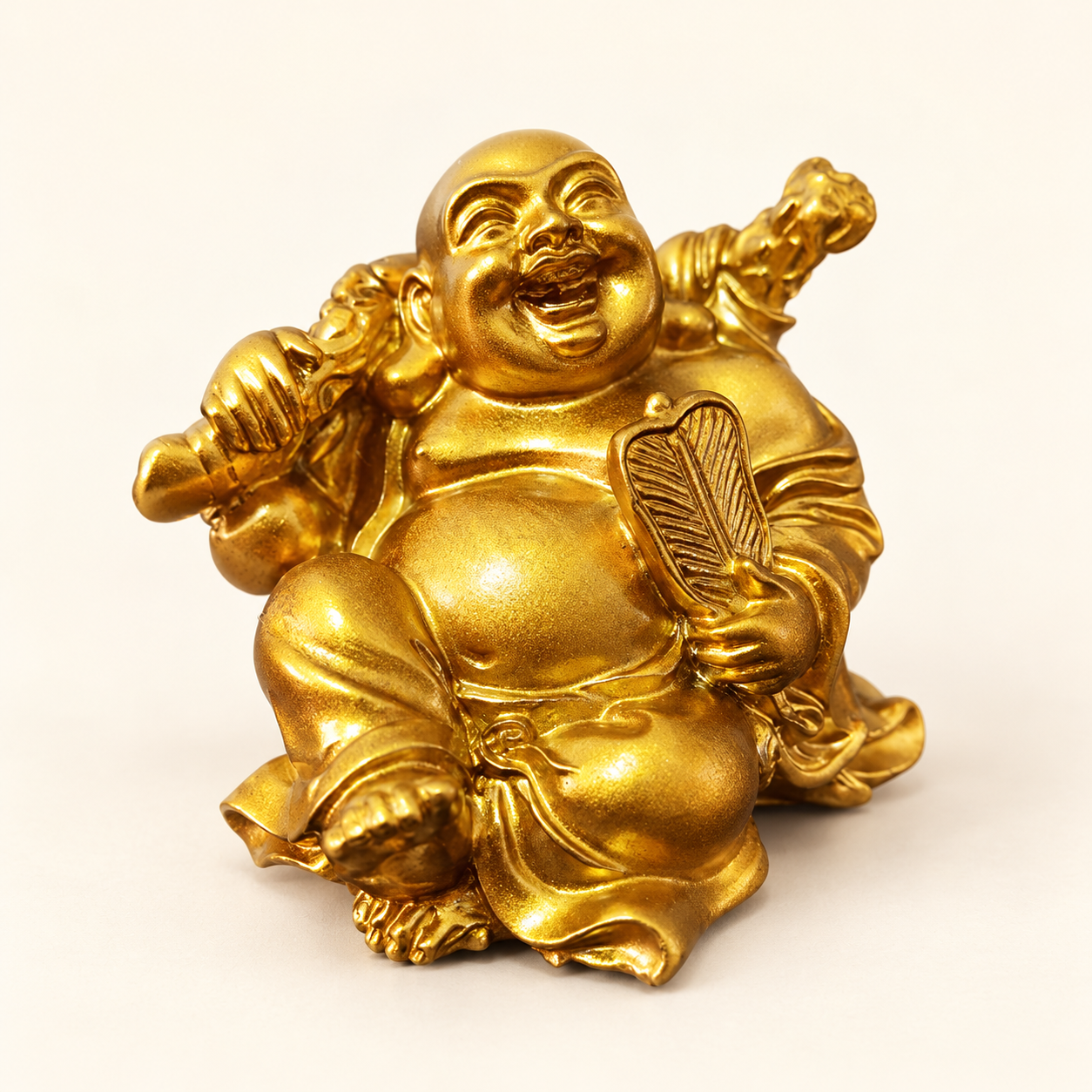
For a personal shelf or desk, our Mini Laughing Buddha with Fan is an example of that approach: a relaxed seated pose, a broad smile and a small, approximately 1.97-inch-high form. The fan and staff make it a particular characterful design, rather than a generic “luck object.”
Choose the meaning before the object
- Name your wish. Encouragement, contentment, protection and abundance are not identical messages.
- Consider the recipient’s connection. Family traditions, beliefs and personal taste should guide your choice.
- Check the format. A wearable charm needs to suit their style; a sculpture needs a place to live.
- Add your own words. Explain why you thought of them in one or two sentences.
You do not need several symbols to make the wish stronger. One object with a clear, personal explanation usually feels more considered than a collection of unfamiliar motifs. For help matching the keepsake to the occasion, read our Laughing Buddha gift guide.
Continue exploring Chinese auspicious motifs and choosing a good luck gift when you are ready for the next decision.