How to Clean a Brass Statue: Finished and Patinated Pieces
Before cleaning a brass statue, decide what you want to preserve. The warm tone, darkened recesses or clear coating may be part of its intended appearance. For ordinary care, start by removing loose surface dust, then follow the instructions for the particular piece.
Check the material and finish first
Read the product information or any records supplied with the statue. Solid brass, brass plating and a brass-colored coating are different surfaces. A photograph or a magnet test alone will not tell you everything about a sculpture’s materials and protective layers.
Look for mention of lacquer, paint, an antique finish or deliberate patination. If the finish is unknown, pause before introducing a liquid cleaner or polish. Ask the maker, seller or a conservator what care is appropriate.
Cleaning and polishing do different jobs
The Canadian Conservation Institute distinguishes removing dirt from polishing, which is abrasive and removes some surface metal as well as tarnish. It notes that repeated polishing can reduce surface detail. It also points out that statuary may have intentionally applied patinas or coatings.
That distinction matters with a small sculpture: its expression and robe folds are details you want to keep. A dark recess is not necessarily dirt that needs to be removed. A consistently matte or aged surface may be exactly how the piece was designed to look.
A gentle routine for loose dust
- Prepare a clear surface. Put down a soft cloth and give yourself good light. Handle the statue by a secure part of its body or base, not a delicate projecting detail.
- Inspect before touching. Check for loose parts, flakes, powdery deposits or a coating that appears to be lifting. If you find these, stop routine cleaning and seek advice.
- Lift loose dust gently. For a sound surface, use a clean, soft, dry cloth. A very soft clean brush can reach intact recesses without force.
- Follow the piece’s care instructions. Do not improvise a wet treatment where the recommended care is dry dusting.
- Return it to a stable indoor display. Choose a location appropriate to the object’s stated use, away from prolonged moisture.
Keep the routine light. Pressing harder is not the next step when a mark remains; first identify what the mark and surface actually are.
An example with an antique brass appearance
Our Antique Brass Laughing Buddha with Ingot has darkened recesses and visible cast texture as part of its listed appearance. Its instructions recommend a gentle wipe with a soft dry cloth and indoor display. Those dark details give the miniature form depth, so brightening every recess would change the look you selected.
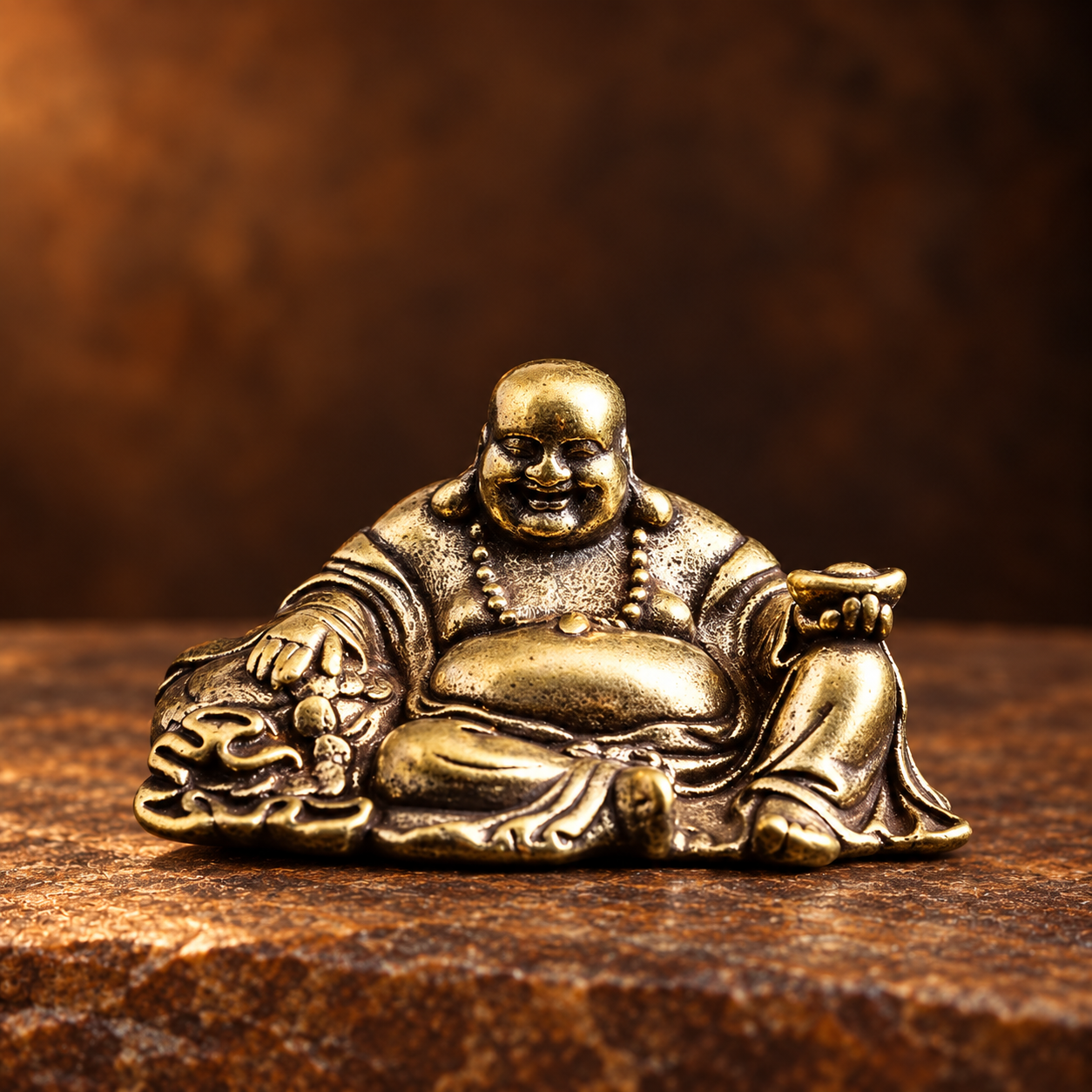
The listing’s approximate dimensions are 1.65 × 0.91 × 0.98 inches in the supplier’s stated size order. At that scale, careful handling and restrained maintenance are especially practical. If you are choosing a small object for a workspace, our desk styling guide considers how to give it a stable place.
Should you use vinegar, lemon or metal polish?
These are not universal treatments for a decorative statue. An acid, abrasive or commercial polish can affect a finish you intended to keep. Do not apply a household recipe to a coated, plated, patinated or unidentified surface simply because it is described as brass.
For a confirmed uncoated object that is intended to be polished, ask for care instructions specific to its construction and condition. For an antique, valuable or religious object, a conservator can assess the finish before treatment.
When to ask for help
Seek advice for persistent deposits, loose coatings, unknown previous treatments or a sudden change in the surface. Photograph the condition before attempting anything further. Routine care can remain simple while more involved treatment is assessed properly.
Our Laughing Buddha design guide can help you recognize the details you want to preserve. The aim is to keep enjoying the chosen piece, with its character and sculpted features intact.
Source and further reading
Canadian Conservation Institute: Cleaning, polishing and protective waxing of brass and copper