
Laughing Buddha Meaning
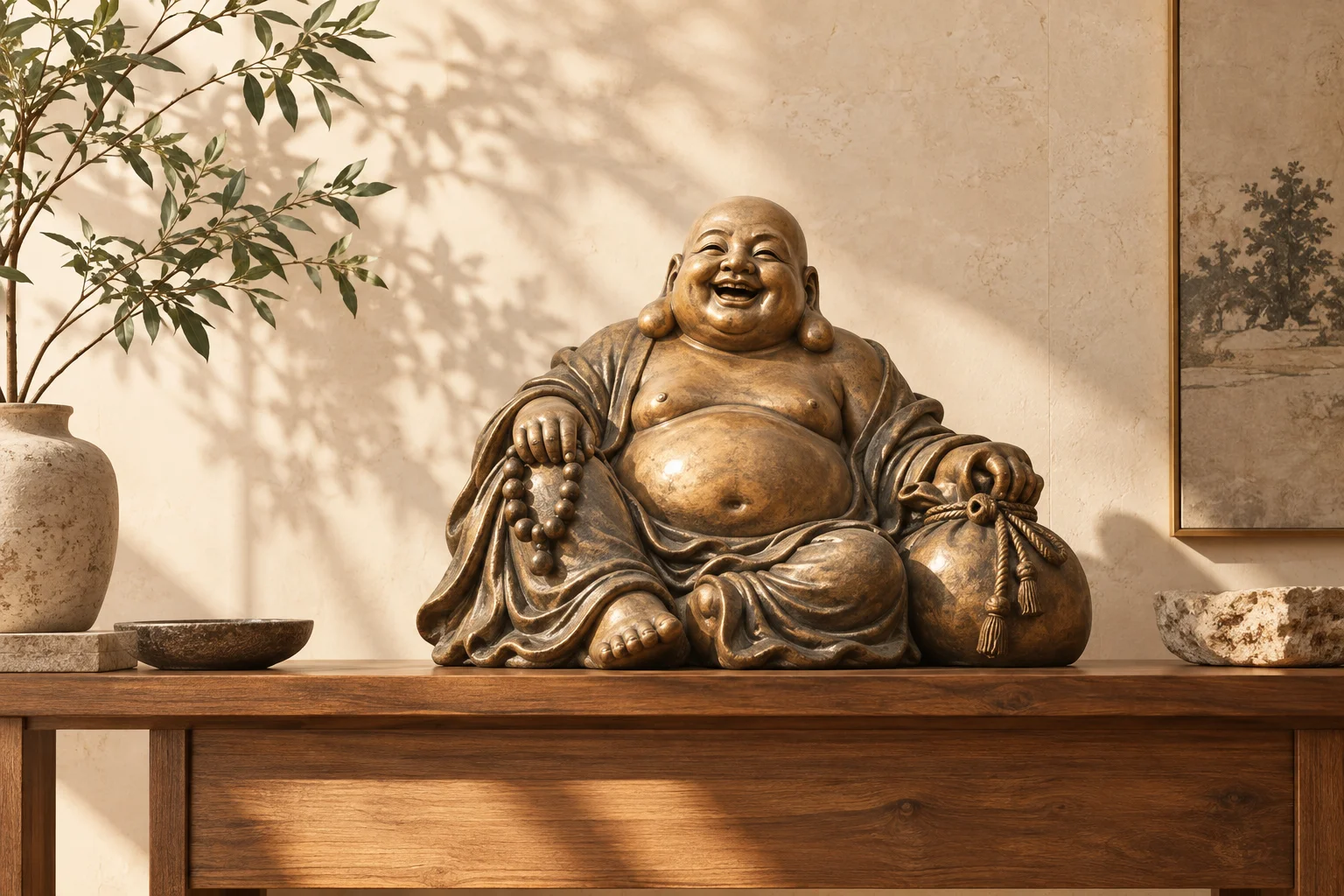
The Laughing Buddha most shoppers recognize is Budai: a smiling, rounded figure in loose monk’s robes, often accompanied by a cloth sack. His welcoming expression makes him a popular choice for home displays and gifts. Understanding the identity and details helps you choose a statue for more than its color alone.
Who is the Laughing Buddha?
Budai is associated with a Chinese monk remembered for his cheerful appearance and cloth bag. In Buddhist traditions he is linked with Maitreya, the future Buddha. In Japan he is known as Hotei. He is distinct from Shakyamuni, the historical Buddha, whose statues often show a different body shape, hairstyle and contemplative expression.
“Happy Buddha” and “Fat Buddha” are common shopping names for this figure. “Smiling Buddha” is broader: it can also describe other Buddhist figures, so check the statue’s identity and visible features.
What do the familiar details mean?
The cloth sack is an identifying feature of Budai. Contemporary decorative designs may add coins, ingots, a money bag, a bowl or children. These details are often interpreted through popular associations with generosity, abundance or family joy. Interpretations vary between communities, makers and designs; each design invites a personal connection with its symbolism.
| Feature | What to notice |
|---|---|
| Cloth sack | A key identifying attribute of Budai; distinguish it from an explicitly money-themed bag. |
| Coins or ingots | Popular decorative references to prosperity and abundance. |
| Children | A lively composition often chosen for its joyful family atmosphere. |
| Bowl | Look at how the bowl is held and the maker’s description; interpretations vary by tradition and design. |
Choose the meaning that speaks to you
A statue can mark an occasion, bring character to a room or serve as a personal reminder of generosity and contentment. Its value lies in its beauty and personal symbolism; wealth, health and luck are independent of owning a statue. Choose a design you enjoy seeing, with a scale and material that suit your display.
From symbolism to a considered purchase
Read the product dimensions in full, check the base material and finish, and inspect close-up photographs. Gold and green describe appearance; the listed material identifies what your statue is made from. A thoughtful choice brings appearance, meaning and practical details together.
Continue with our guide to statue designs, explore statues with children, or browse all collections.
Further reading: The Metropolitan Museum of Art: Buddhist monk Budai · The British Museum: Hotei / Budai.