
Tea Pets: Meaning, Everyday Use and Choosing a Tea-Corner Companion
A tea pet is a small figure that accompanies a tea session. Traditional examples often sit on a Chinese gongfu tea tray, where their owner pours a little tea over the clay. Other figures simply sit beside the cups, adding a familiar face to an everyday pause.
The useful first question is what you want the figure to do. A piece intended for repeated tea pouring needs different care and a different surface from an ornament displayed beside your tea things. Knowing the difference makes choosing much easier.
What are tea pets for?
Tea pets are companions to the experience rather than essential brewing tools. You can brew and enjoy tea without one. Some people enjoy tending a clay figure over time; others like the way a small animal or smiling character makes their setup personal.
Many traditional examples use unglazed Yixing clay. Tea can gradually change the surface appearance, although the result depends on the material and use. A shiny finish, the words “purple clay,” or a photograph beside a teapot do not, by themselves, establish that a particular object is suitable for this practice.
Tea-pouring figure or dry decorative companion?
Decide between these two uses before comparing designs. If you want to pour tea over the piece, look for an explicit statement that it is intended for that purpose, along with care instructions. Ask whether the surface is unglazed, coated, painted or fitted with additional parts.
If you mainly want something pleasant to look at during a tea break, a dry ornament gives you more flexibility. It can sit on a separate shelf or the dry side of your setup. Keep it outside the pouring area and follow its own care instructions rather than instructions for a different clay object.
- For tea pouring: confirm wet-use suitability, recommended care and a tray that collects runoff.
- For dry display: check the full footprint, stable base and space beside your cups.
- For a gift: learn how the recipient makes tea before choosing either type.
Choose the shape you will enjoy seeing
A tiny figure can disappear behind a tall cup. A wide one may occupy the space you need for a gaiwan or serving pitcher. Set out your actual teaware first, then mark the remaining space with a piece of paper. Include the base width and depth, not just the height.
Think about your normal view. A low figure is appreciated from above or close beside it; a more upright design may be easier to see across a table. Favor a simple arrangement that lets you reach every cup without lifting the ornament each time.
A Laughing Buddha beside your daily tea
If a warm expression is what draws you to tea pets, Budai can be a thoughtful dry companion to your tea corner. His familiar smile is associated with contentment and generosity; our Budai and Hotei guide explains who the figure represents.
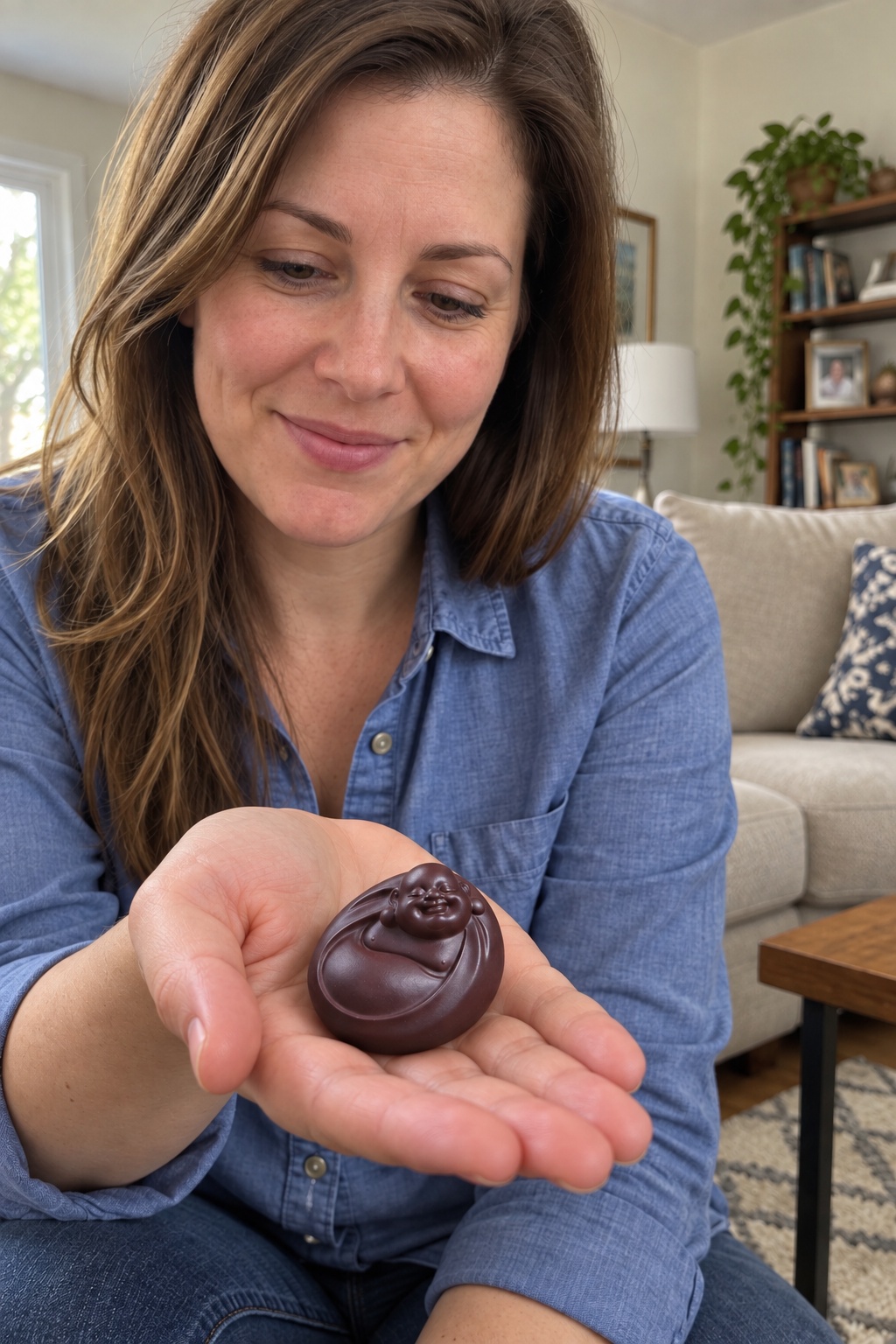
For a particularly small setup, our Mini Purple Clay Laughing Buddha has a low burgundy-brown form approximately 1.18 inches high, with a footprint about 1.69 by 1.97 inches. It suits a stable indoor surface where you can see it up close. Keep this piece in a dry display position: its current listing describes a decorative accent and does not verify repeated hot-tea pouring.
If you choose a purpose-made tea pet
Follow the maker’s instructions for that exact piece. For an unglazed figure explicitly sold for tea pouring, the routine commonly includes gentle pouring on a suitable tray, careful cleaning and drying between sessions. Avoid adding detergents, polish or oils unless its maker specifically recommends them.
Set the tray away from electrical equipment and surfaces that stain easily. Make sure it can collect the liquid you actually use. You should still be able to set down a hot cup securely; the figure should not become an obstacle during pouring.
What about before-and-after photographs?
Photographs can show how a particular figure changed, but they cannot predict your result. Lighting, moisture and the original surface all affect its appearance. Compare images taken in similar light after the object has dried, and avoid treating rapid color change as a quality test.
For a decorative statue, there is no need to create a patina. Enjoy the finish you chose and use the care guidance supplied for it. A tea corner can feel personal through the cup, a favorite cloth and one well-placed figure without adding another maintenance routine.
Can a tea pet be a gift?
Yes, when it fits the recipient’s habits. A person who enjoys gongfu brewing may appreciate a confirmed tea-pouring piece; someone who drinks from a mug at a desk may prefer a dry keepsake. Include a short note about why you chose the design and its intended use. For other thoughtful options, see our Laughing Buddha gift guide.
Further reading: A Moment of Tea: tea-pet use and care.