Symbols of Happiness: Meaningful Motifs for Your Home and Gifts
Some symbols of happiness are easy to recognize: a smile, a heart or a photograph of a shared moment. Others need a little context. The most meaningful choice is often the one that connects a clear wish with something the recipient already loves.
There is more than one kind of happiness
Before choosing a symbol, decide what you want it to say. A lively smile can suggest delight. A family photograph may express belonging. A quiet keepsake can stand for contentment. A symbol does not need to convey all of these at once.
Try finishing this sentence: “I hope this reminds you of…” The answer might be a joyful friendship, a new home together or permission to enjoy small moments during a busy week. That is a more useful starting point than looking for the supposedly strongest happiness charm.
A smiling figure: contentment made visible
Budai, commonly called the Laughing Buddha, is one recognizable figure associated with contentment. His familiar smile makes a contemporary sculpture easy to connect with a personal wish for everyday joy. The Rijksmuseum’s interpretation of Budai provides historical context for that association.
If the recipient enjoys playful jewelry, our Silver-Colour Laughing Buddha Bead Bracelet carries the smiling face into a wearable design. Budai face beads alternate with smooth round spacers, so the motif becomes a rhythm around the bracelet rather than a single pendant.
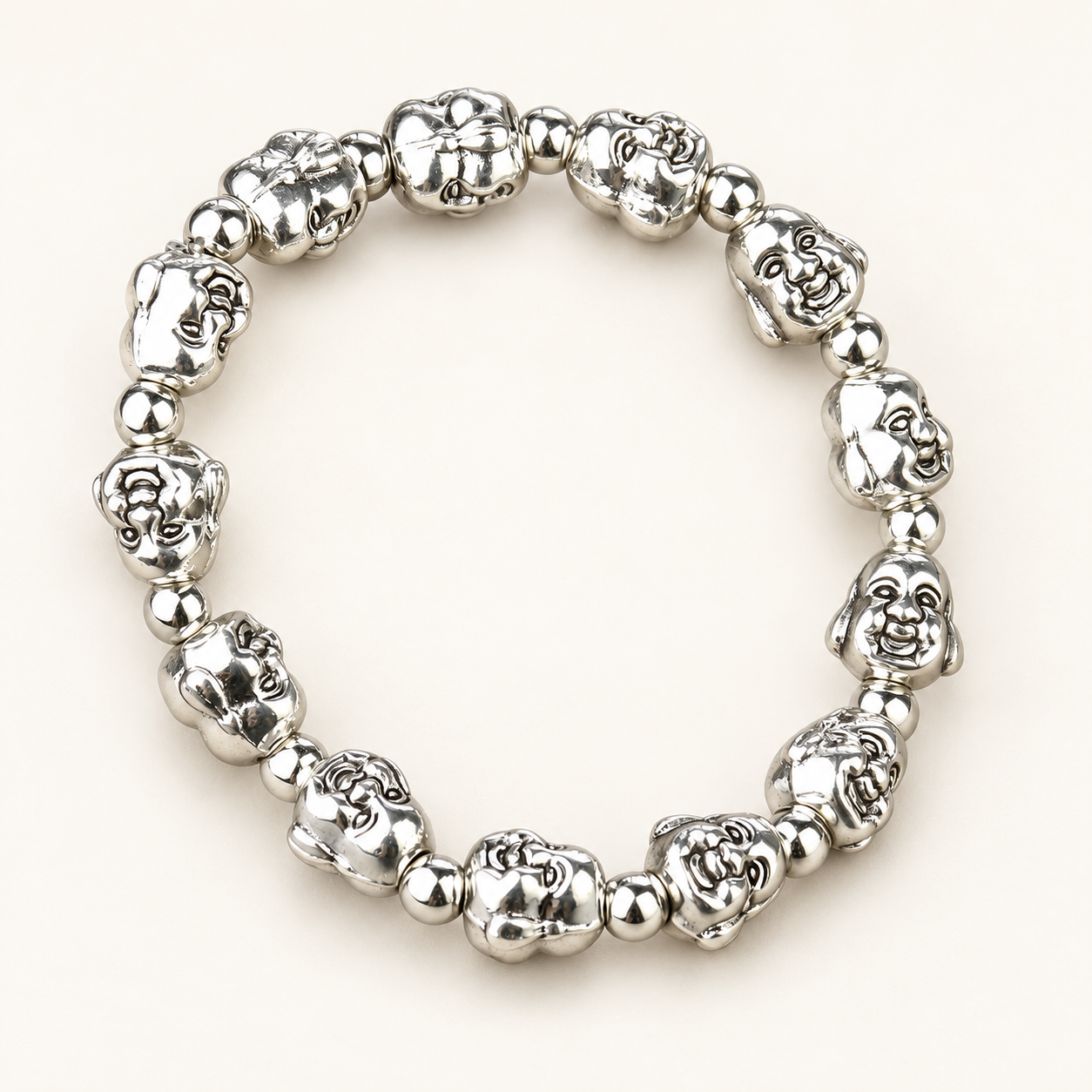
The listing identifies the material as supplier-described zinc alloy with a silver-color finish. Its listed size is approximately 6.7 inches, with no confirmed stretched fit range. That makes checking fit and finish an essential part of choosing it for someone.
Double happiness: a written symbol
The Chinese “double happiness” character gives happiness a written form. It can appear alongside other auspicious motifs; the Met’s collection includes a vase with the character, bats and peaches. Written designs deserve the same careful identification as figures.
If you are buying an object with Chinese calligraphy, ask what the actual characters say. Choose a design connected to the occasion and the recipient, rather than relying on the color or a generic “lucky symbol” label to explain it.
Hearts and shared memories: personal meaning
A heart can be a straightforward contemporary expression of affection. Its meaning in your gift may come less from a historical explanation than from the relationship itself. A small print, a handwritten card or an engraved keepsake can say something warm without needing a complicated story.
A framed photograph works differently: it points to a particular moment of happiness rather than an abstract wish. Choose an image the recipient enjoys, and consider a frame that fits their room. The personal connection gives an ordinary object its significance.
Nature motifs: distinguish a tradition from your own reading
A flower, a bird or a sun can feel joyful because of its color, movement or connection to a favorite place. That personal response is valid, but it should be described as your interpretation unless the object has a documented cultural meaning.
For example, “this flower reminded me of your garden” is a precise, affectionate explanation. It does not require a claim that every culture treats the flower as a symbol of happiness. When a design comes from a specific tradition, learn that context before attaching your own message.
Give the symbol a comfortable place in everyday life
For someone who prefers home objects to jewelry, a small sculpture can offer a cheerful point of attention. Our Mini Gold-Colour Laughing Buddha with Fan has a relaxed raised-knee pose and a warm decorative finish. At approximately 1.97 inches high, it is a piece to notice beside books or on a personal desk.
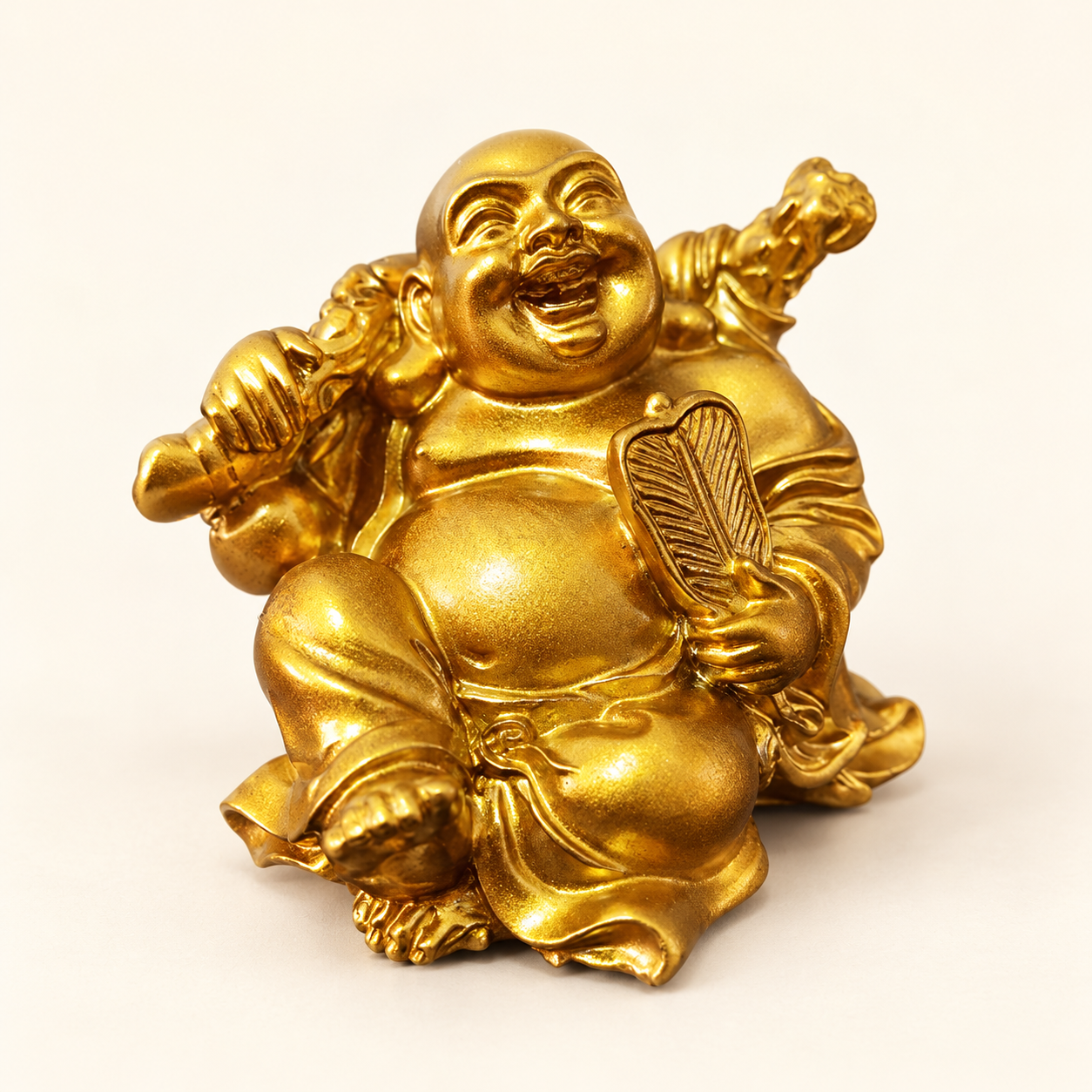
Think about the recipient’s existing room before choosing. A single small accent may feel more welcome than a large new display. The expression can carry the message while the scale respects the space.
Make the note as personal as the object
“For more moments like the ones we shared this summer” fits a photograph. “A little smile for your next chapter” fits a cheerful figure. “I saw this and thought of your garden” fits a nature motif. Specific words make the meaning feel like it belongs to the recipient.
If you are still deciding between a wearable keepsake and a home accent, our Laughing Buddha gift guide helps match the format to the person. To understand the figure before choosing, read what the Laughing Buddha represents.
Continue exploring gifts for a new chapter when you are ready for the next decision.