
Zen Decor Ideas: Bring Calm Home Without Adding Clutter
If a room feels visually busy, adding more “calming” ornaments rarely solves the problem. Begin with the objects you use, the surfaces you see and the paths you walk. The most useful zen decor ideas make an ordinary room feel considered without making it difficult to live in.
Understand the word before choosing the look
Zen is a Buddhist tradition centered on meditation, not simply a name for beige interiors. The Metropolitan Museum of Art’s introduction to Zen Buddhism explains that religious context. In home styling, people often use “zen decor” more loosely to mean a simple, quiet-looking room.
The ideas here concern that everyday styling goal. If you are creating a religious space, let the relevant tradition guide the objects and their arrangement.
Clear one surface first
Choose a console, side table or shelf. Remove everything, clean the surface and return only the things it needs to hold. A lamp, a useful tray and one personal object may be enough. Place everyday paperwork somewhere you can retrieve it without leaving it on display.
Do not empty a whole room at once. One finished surface gives you a useful reference for the rest of the space, and makes it easier to see whether an additional piece would improve the arrangement.
Repeat colors instead of buying a matching set
Look at the large elements you already own: the floor, sofa, curtains and walls. Choose two or three colors that work with them, then repeat those colors in smaller details. Warm brown clay might echo a wood cabinet; a pale cushion might connect with a curtain.
Neutral colors are one option, not a requirement. A favorite blue or green can belong in a quiet-looking room when the surrounding arrangement is simple. Keep the palette personal enough that you enjoy coming home to it.
Balance texture and open space
A woven basket, a smooth ceramic bowl and a fabric throw offer different surfaces without needing a crowded display. Leave visible space around each group. That space helps an object’s shape stand out and gives you room to use the table.
For shelves, try grouping books together rather than spreading decorative items across every gap. Keep heavy objects on stable surfaces and leave anything delicate clear of the shelf edge.
Choose a personal focal point
Once the essentials are working, one meaningful accent can finish the arrangement. It might be a family photograph, a handmade vessel or a small sculpture whose expression you enjoy.
Our Purple Clay Laughing Buddha is an option for a reader drawn to warm reddish-brown clay and Budai’s smile. At approximately 2.28 inches high, it is a close-up accent beside books or a tea corner. The compact form gives the object a place in the composition without asking it to fill the room.
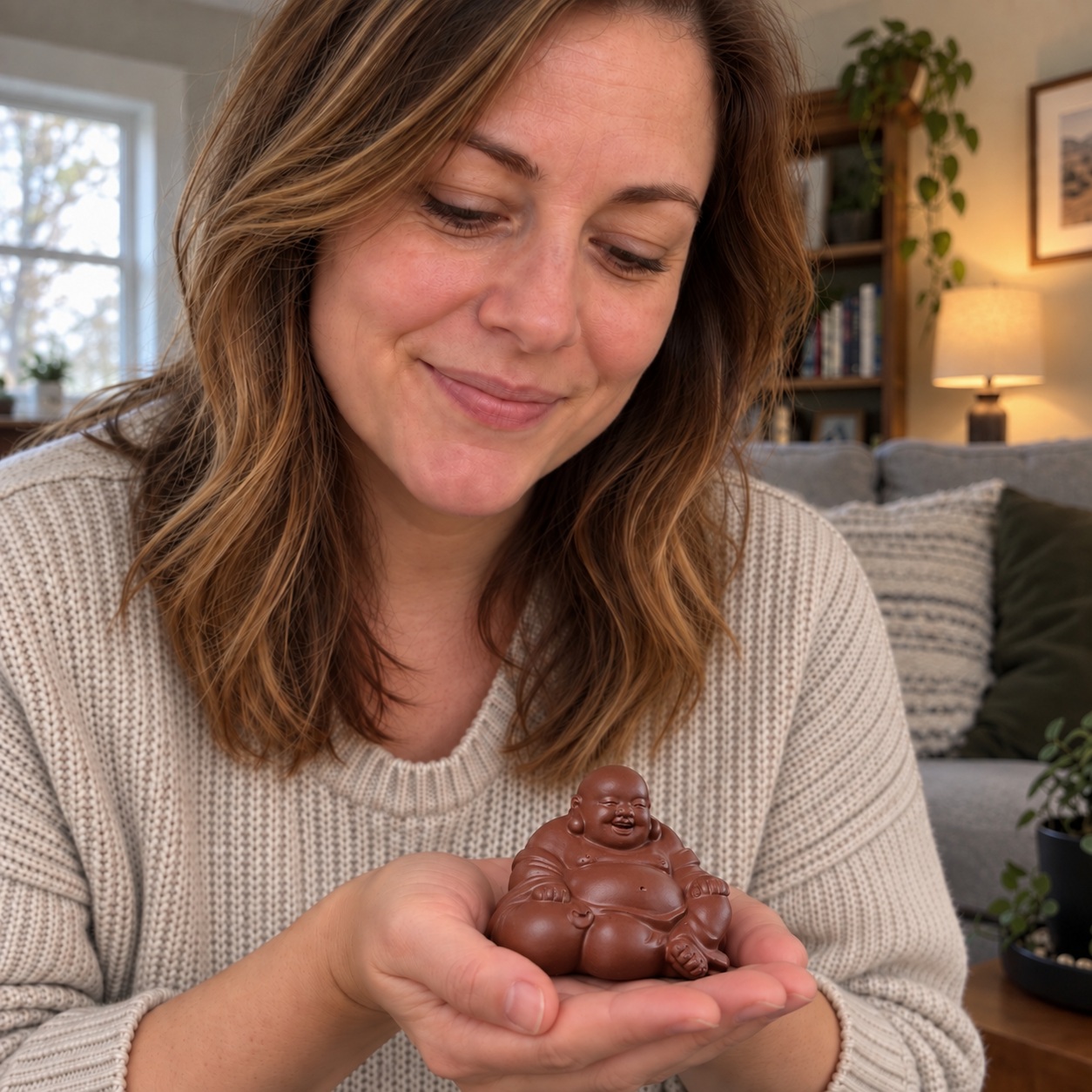
Budai’s identity is worth understanding in its own right. Read our Laughing Buddha meaning guide before selecting a figure solely for its decorative appearance.
Keep the room easy to maintain
Before adding a piece, consider how you will dust it and whether you can move it safely. A clear surface should make daily use simpler. If an arrangement requires constant rearranging to set down a cup, edit it again.
Try the room in daylight and after dark. Adjust a lamp or curtain before buying another accessory. Practical light and storage often make the largest difference to how finished a room feels.
For a more specific setting, continue with our office styling guide or bedroom decor ideas. If you want a regular place to sit quietly, our meditation space guide starts with comfort and use. Build the room around your life, then choose the details that give it character.