
Feng Shui Living Room: Layout, Flow and Meaningful Decorative Details
A feng shui living room starts with the room you actually live in: where people enter, sit, talk and relax. Before choosing decorative objects, look at how the furniture supports those activities. A considered layout gives a favorite detail somewhere to belong.
Feng shui includes different schools and methods. This guide combines an introduction to those traditions with practical arrangement suggestions, so you can make useful changes without treating one decorating rule as universal.
Sketch the room before moving the sofa
Draw a simple outline showing doors, windows and fixed features. Mark the routes people use between the entrance, seating and adjoining rooms. Add the furniture you need, including the pieces that stay in place. The sketch does not need to be precise enough for construction; it needs to reveal where everyday movement becomes awkward.
For a feng shui living room layout, begin with one question: can everyone reach a comfortable seat without squeezing around a table? Try moving a small item first. A basket placed beside a cabinet rather than in the doorway may make more difference than a new ornament.
Arrange seating around the way you gather
Choose the main seat by what the room is for. If conversation matters most, angle chairs so people can speak comfortably. If the room also serves movie nights, make the television easy to see without requiring every seat to face it all day.
A wall behind a sofa can provide a clear visual boundary. In an open room, a rug and a console may help define the sitting area instead. Treat these as arrangements to test, taking account of doors, daylight and the people who use the space.
Make a small living room work harder
In a small living room, reduce the number of surfaces that compete for the same job. One side table might hold the lamp and a drink, while a closed cabinet handles occasional items. Choose furniture whose actual footprint leaves the routes you marked on the sketch available.
A living and dining room combination benefits from an obvious place for each activity. Keep the dining chairs usable when the sofa is occupied. Walk through the room with the chairs pulled out before deciding that the arrangement is finished.
Choose light and color for the room you have
Check the room in daylight and in the evening. Position a reading lamp where you need it, and try fabric or paint samples beside the existing furniture. A color that looks appealing online can feel quite different next to your floor or under your lamps.
If you want to explore traditional color associations, our five-elements guide explains the framework. You can consider those associations alongside the light, finishes and personal preferences in your home.
Give one meaningful piece room to be seen
Once the useful items have a home, choose a detail you enjoy seeing from your usual seat. A family photograph, a small sculpture or a keepsake can make the room feel personal. Keep enough empty surface around it to make cleaning and everyday use straightforward.
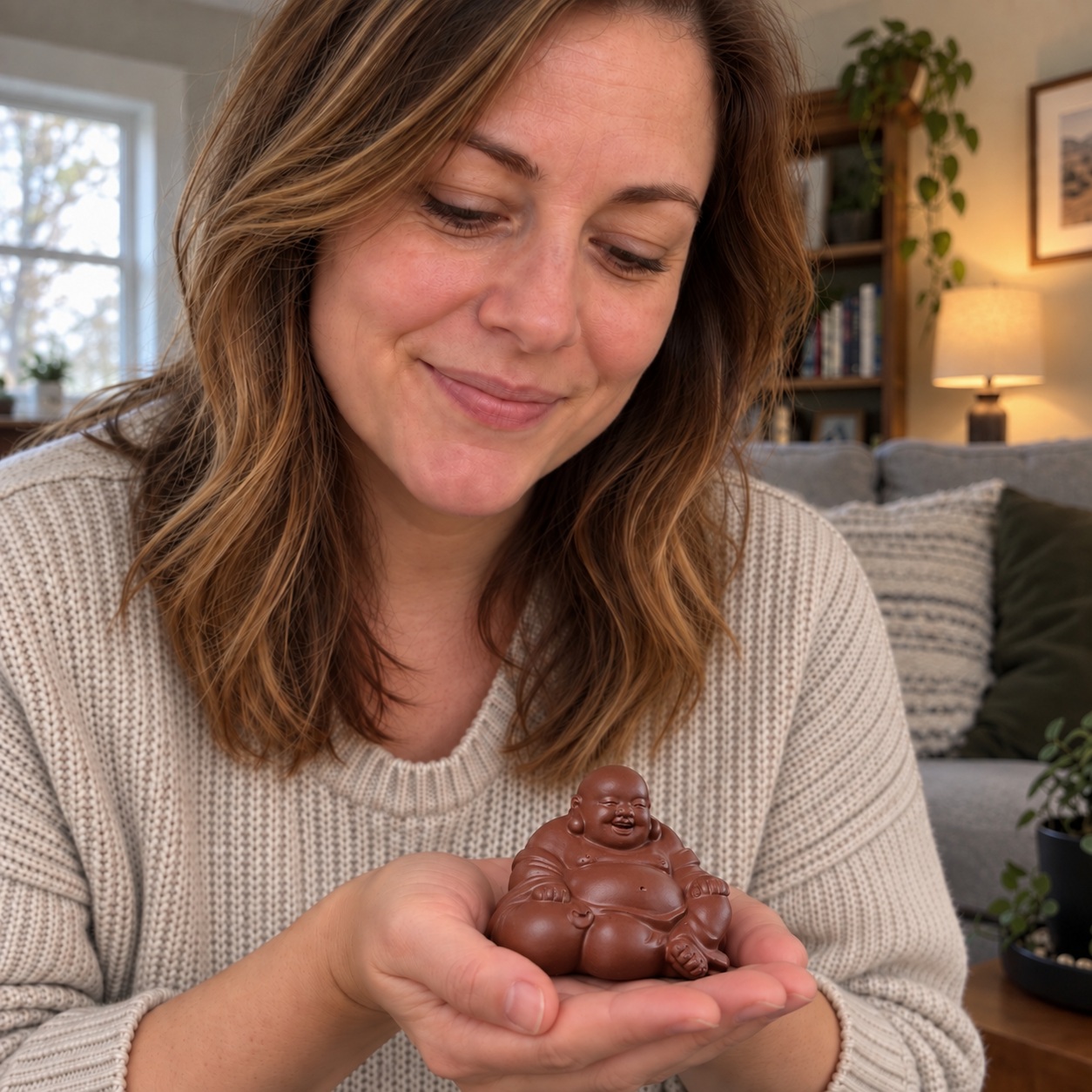
If Budai’s warm expression suits your room, our Purple Clay Laughing Buddha offers a reddish-brown accent approximately 2.28 inches high. Its compact seated form works best on a stable indoor shelf where you can appreciate it up close, perhaps beside a favorite book rather than among several competing ornaments.
Does the statue have to face the front door?
There is no single direction rule shared by every feng shui approach. If you follow a practitioner’s method, use their advice consistently. For practical display decisions, our Laughing Buddha placement guide covers visibility and space around the piece. For the entrance itself, continue with entryway ideas.
Further reading: International Feng Shui Guild: perspectives and schools.