Feng Shui Elements: Understand the Five Elements in Home Decor
The five feng shui elements are Wood, Fire, Earth, Metal and Water. They form a traditional framework for considering relationships within a space. Understanding the framework can help you read decorating advice more carefully and choose details with a clearer sense of their associations.
An element is broader than a material label. A room may refer to an element through color, form or an image as well as through an actual object. These associations belong to feng shui traditions; your practical choices still need to suit the room and the people who use it.
A simple guide to the five elements
- Wood: commonly represented through greenery, plants and upright forms.
- Fire: associated with red tones, light and pointed shapes.
- Earth: often expressed through warm earth tones, square forms and ceramics.
- Metal: represented by metal objects, pale colors and rounded shapes.
- Water: associated with dark tones, flowing forms and images of water.
These are common examples rather than a complete prescription. Different applications consider more than one feature of an object, and a piece can suggest several associations at once.
Begin with what is already in your room
Look around before adding anything. Note a plant, a lamp, a ceramic bowl, a metal frame or a photograph of the sea. List the colors and shapes you notice, then consider which objects you enjoy and which ones you use.
This observation is more useful than starting with a shopping list of five required ornaments. A home already contains a range of materials and forms. Keep the items that suit your everyday life and let the framework help you understand their visual relationships.
Material and appearance are separate details
A metallic color does not tell you what a statue is made from. Read the material description as well as looking at its finish. Likewise, a dark ceramic object remains ceramic even if its color has another association within the framework.
For an example of a modest ceramic detail, our Small Ceramic Laughing Buddha has a reddish-brown finish and a low seated form approximately 0.98 inches high. If you already like Budai’s expression, it can sit beside a book on a stable indoor surface while adding a warm material detail to the arrangement.
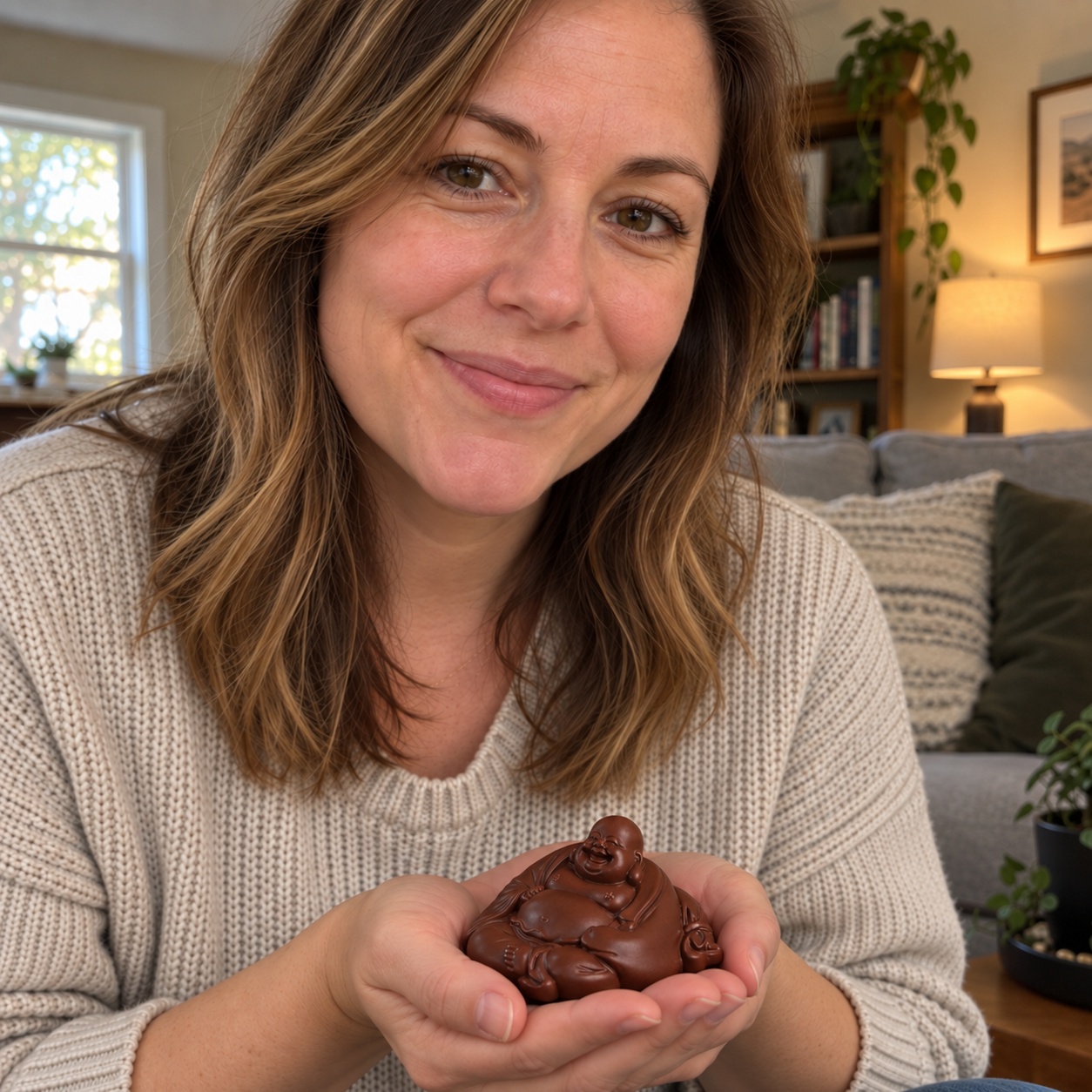
If a metal accent better suits the objects around it, the Mini Brass Laughing Buddha is approximately 1.18 inches tall. The choice can begin with the verified material and the space you have, rather than assuming a larger piece carries more meaning.
What do the element cycles mean?
Feng shui describes supportive and regulating relationships among the elements. Water nourishing Wood and Wood feeding Fire are common examples of the supportive cycle. The relationships are a traditional interpretive system, rather than instructions to place literal water beside every wooden object.
When exploring those relationships, keep the whole arrangement in view. A lamp should still provide useful light; a plant should suit its growing conditions. A symbolic association is one consideration within a room, not a reason to make the space difficult to maintain.
Do you need equal amounts of all five?
The framework does not require an exact one-fifth share of each element in every room. Application varies with the approach and the particular space. If you want a detailed reading, discuss your room with a practitioner whose method you understand.
Turn understanding into one considered choice
Choose one room and one decision: a finish for a shelf, a lamp for a reading area or a personal keepsake. Compare it with what is already there. Our living room guide puts those choices into a practical layout, while feng shui symbols explained explores the meanings of individual motifs.
Further reading: International Feng Shui Guild: the Five Elements.