Buddha Statue Meanings: How to Identify Different Figures and Designs
A smiling figure with an exposed belly and a serene figure touching the ground can both be sold as a “Buddha statue.” They tell different stories. To understand a statue’s meaning, first identify the figure, then look at its hands, posture and accompanying objects.
Start with the figure, before the pose
“Buddha” is a religious title, and Buddhist art includes more than one Buddha as well as bodhisattvas and other figures. A store label alone may be too broad to identify a sculpture. An object’s name, place of origin and documented attributes offer a firmer starting point than its color.
The historical Buddha, Shakyamuni, is associated with the life and awakening of Siddhartha Gautama. Amitabha is another Buddha, central to Pure Land traditions. Budai, commonly called the Laughing Buddha, is a different figure: a Chinese monk associated in tradition with Maitreya, the future Buddha. These identities should not be treated as interchangeable.
How to recognize the Laughing Buddha
Look for a broad smile, a rounded exposed belly and a loosely worn robe. A sack is another important clue. The Metropolitan Museum of Art identifies Budai through the monk’s laughing face, round stomach and cloth bag.
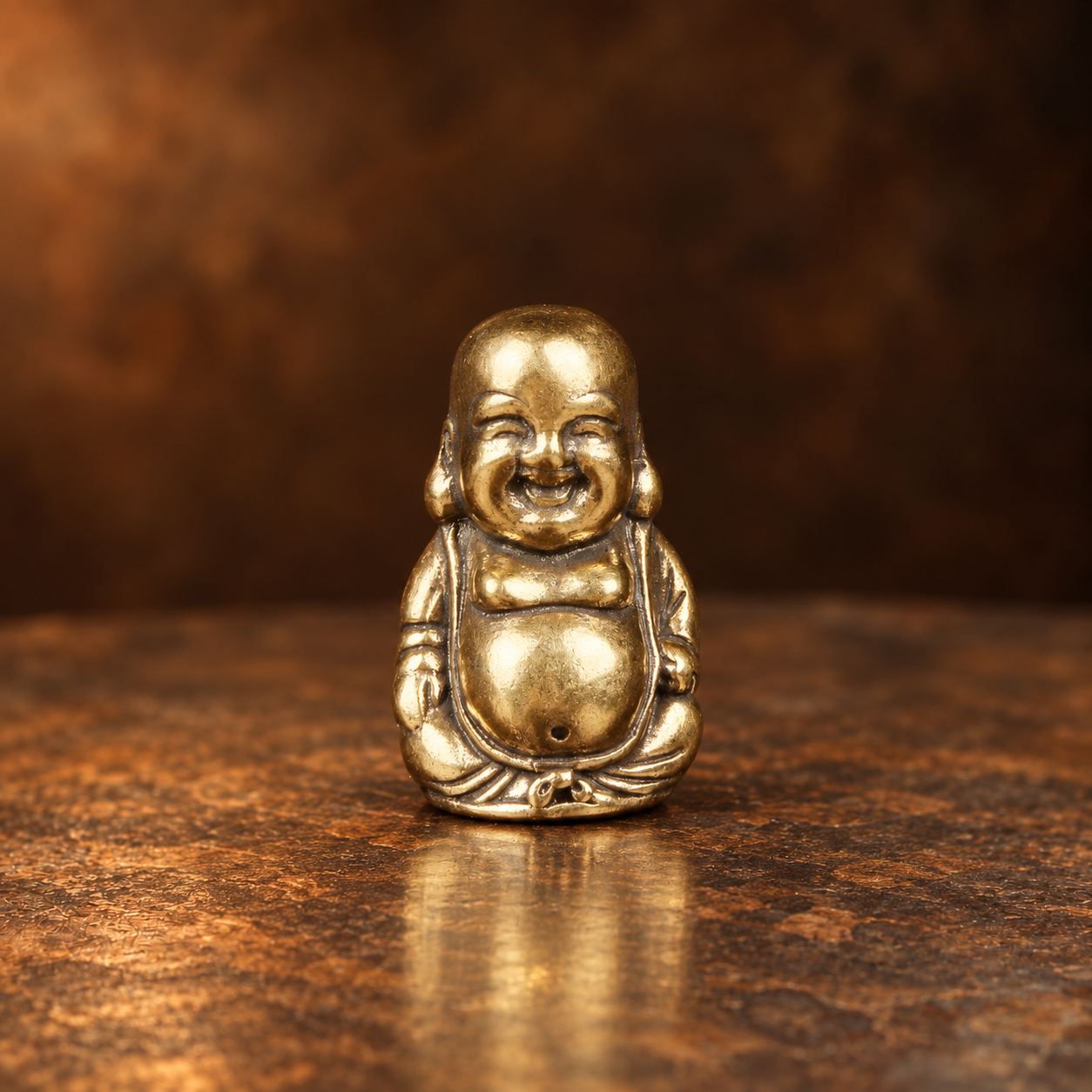
A simple design makes those features easy to see. Our Mini Brass Laughing Buddha shows the open robe and seated, rounded figure without an elaborate base. At approximately 1.18 inches tall, it is a close-up desk or shelf accent; its small scale is worth checking before you picture it across a room.
For the symbolism specifically attached to this smiling figure, continue with our Laughing Buddha meaning guide. That is the right next step once you know the statue represents Budai.
What common hand gestures can tell you
In Buddhist art, meaningful hand gestures are called mudras. They belong to a figure’s iconography, rather than a universal code that works independently of the rest of the sculpture.
- Earth-touching hand: a seated Buddha reaches one hand toward the ground. This gesture recalls the Buddha’s awakening and calling the earth to witness.
- Raised open palm: the gesture called abhaya expresses reassurance or fearlessness. Smithsonian interpretation of an Amitabha sculpture offers an example.
- Hands resting in the lap: this can indicate meditation. Read the object’s identification alongside the gesture; a quiet seated posture does not establish the figure’s name by itself.
A hand holding an ingot, bag or fan on a modern Budai ornament calls for a different reading. Identify the object first, rather than labeling every hand arrangement a religious mudra.
Read objects as additional layers
A sculpture may combine the figure’s identity with auspicious imagery. A ruyi scepter, for example, carries the wish “as you wish.” It adds a particular good-wishes motif; it does not turn the entire statue into a different Buddha.
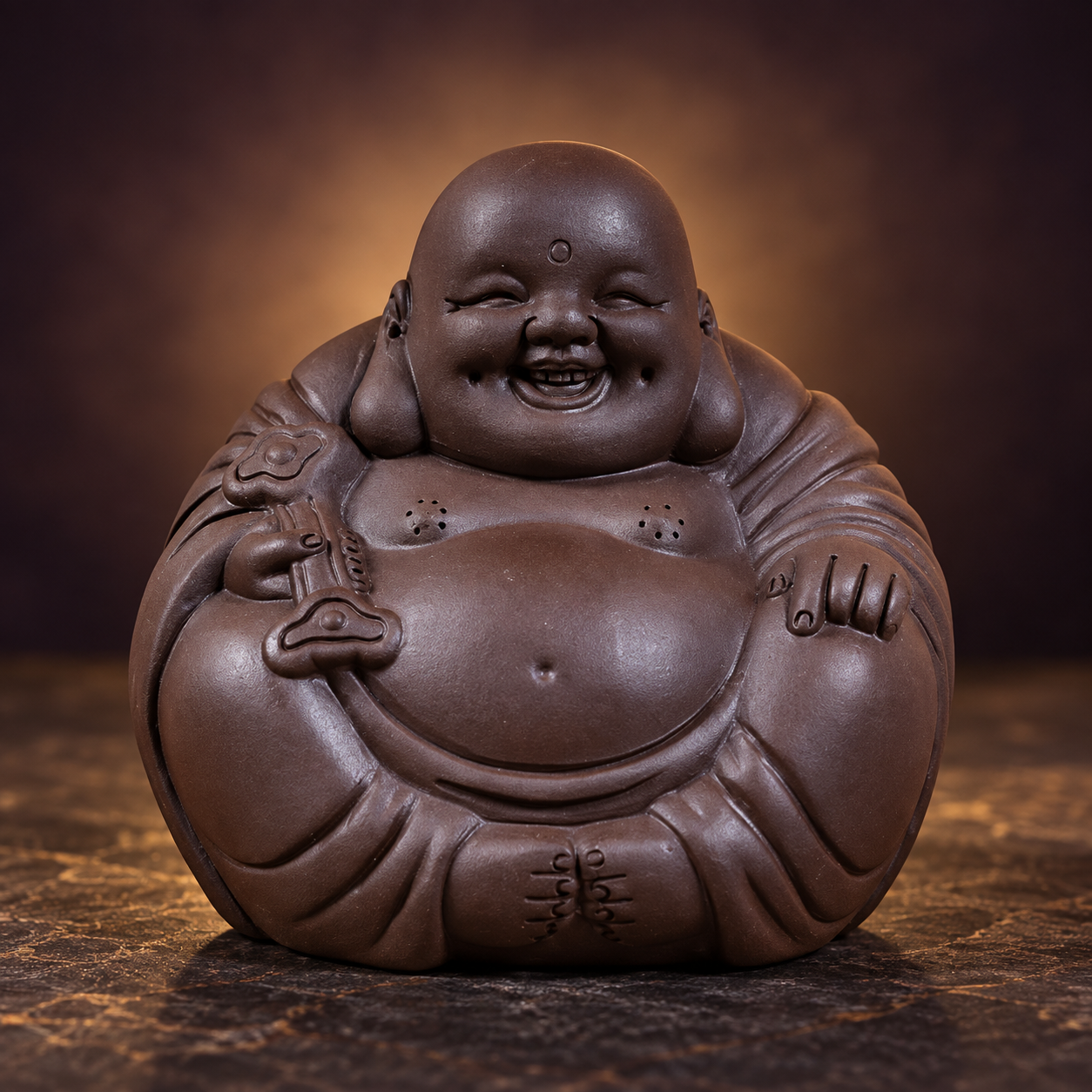
That distinction is visible in our Ceramic Laughing Buddha with Ruyi. Budai’s face and open robe identify the figure, while the scepter across his chest adds the design’s specific character. Its dark-brown finish and roughly 2.95-inch height suit someone who enjoys a compact, understated display.
Does the statue’s color change its identity?
Color can be important in a documented religious image, but decorative retail finishes do not provide a reliable identification system. A gold-colored Budai remains Budai. A green carving is not automatically a particular Buddha or a certified gemstone.
Keep three questions separate when reading a listing: who is represented, what the sculpture is made from, and what its surface looks like. A bronze-colored resin piece and a copper sculpture may resemble one another in a photograph while being materially different.
A practical way to choose a meaningful statue
- Choose the story you connect with. Contentment, a particular Buddhist tradition or a good-wishes motif may matter more than an elaborate design.
- Confirm the figure and details. Read the name and inspect the hands and objects in the product photographs.
- Check the physical piece. Compare height, width and depth with the intended surface, and review the stated material.
- Consider the setting. A religious display may call for guidance from the relevant community. A decorative keepsake still deserves a clean, stable, considered place.
When you are choosing between different Budai designs, our guide to Laughing Buddha poses and objects explores that narrower question. Understanding one layer at a time makes the final choice more personal.
Continue exploring why the Laughing Buddha has a rounded belly and the figure on a Buddha necklace when you are ready for the next decision.