Buddhist Gifts: Choose Thoughtfully for the Person and Their Tradition
The most thoughtful Buddhist gifts begin with the person receiving them. Their tradition, interests and everyday habits tell you more than a generic list of spiritual objects. A considerate question often leads to a gift they will use or appreciate for years.
You do not need specialist knowledge to be thoughtful. Begin by noticing what they already enjoy, then check the details before choosing an object with religious meaning.
Ask about their interests without spoiling the surprise
Find out whether they would enjoy a book, an experience or something for their home. If the gift relates to a particular practice, ask what they use already. Someone may have a preferred edition of a text, a particular teacher or a carefully arranged personal space.
A question such as “Would you enjoy something to read, or a small keepsake for your shelf?” gives them room to guide you. It can also reveal that the best choice is an everyday comfort rather than a religious object.
Choose useful gifts around familiar habits
For a reader, a title they have mentioned or a gift card to their preferred bookshop can be a considered choice. For someone who enjoys quiet writing, a notebook with paper they like may feel personal. A shared meal or time together can be equally welcome when it suits the occasion.
If you are considering something for meditation, check their existing routine first. Seating preferences and personal practices vary. Our meditation gift guide helps you choose around those habits rather than assuming everyone needs the same equipment.
Know the figure before choosing a statue
Buddhist imagery includes different figures, traditions and meanings. A smiling, round-bellied Budai is not the same image as the historical Buddha. The Metropolitan Museum of Art identifies Budai as a Chinese monk associated with Maitreya in East Asian tradition.
That distinction matters when choosing a gift. If your friend wants an image for a particular devotional practice, ask which figure and form they would welcome. If they appreciate Budai as a cheerful cultural or personal keepsake, a Laughing Buddha can be a more straightforward choice.
Match a keepsake to their taste and space
Notice the scale of the objects they already display and the finishes they enjoy. A person with a small apartment may appreciate a compact piece, while someone with a dedicated display may prefer a different size. Check the actual dimensions rather than relying on the apparent scale of a photograph.
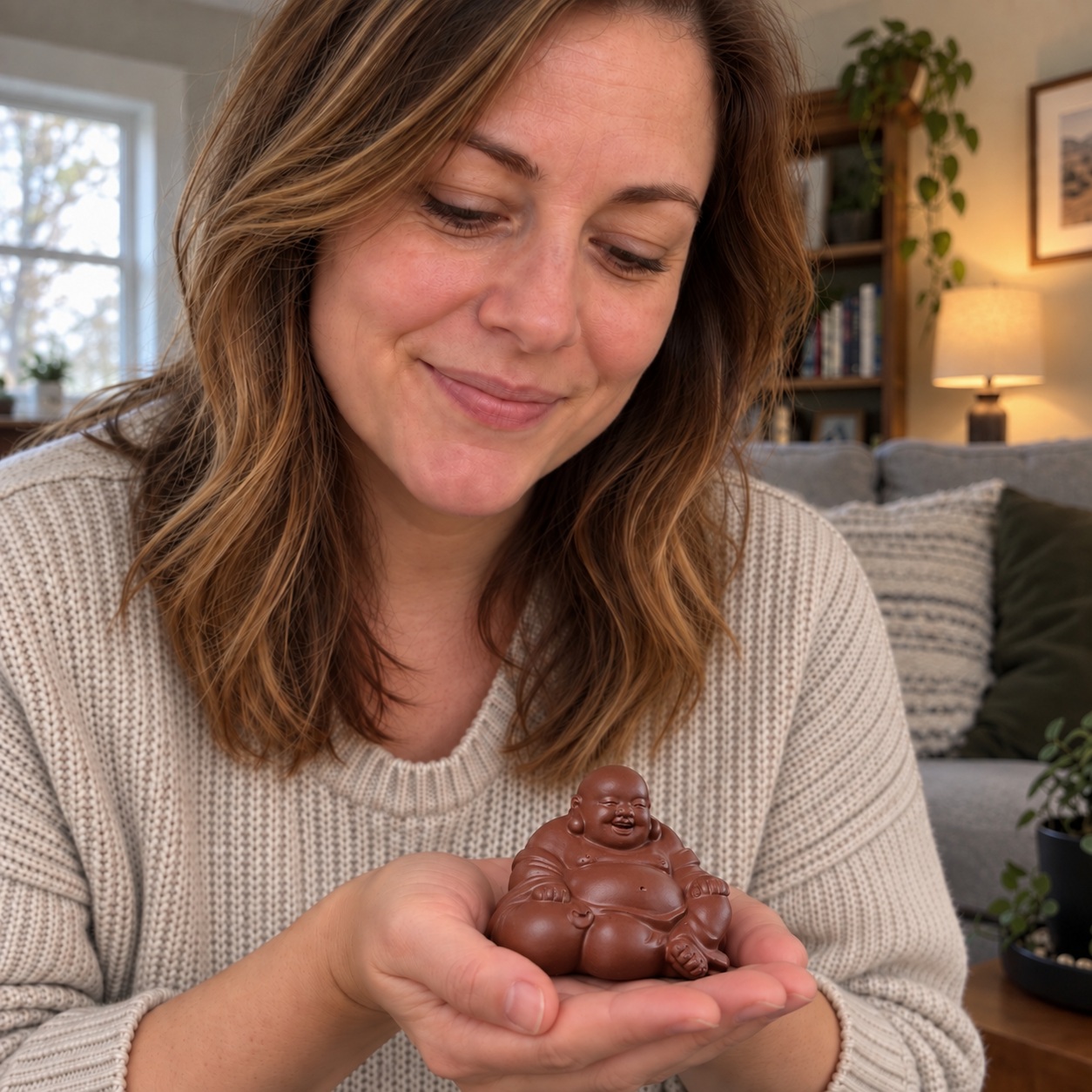
For a recipient who already enjoys Budai’s expression, our Purple Clay Laughing Buddha has a warm reddish-brown finish and hands resting on his knees. At approximately 2.28 inches high, it is a compact indoor accent to appreciate on a stable shelf. It suits someone who welcomes that particular figure and enjoys small sculptural details.
If you are still identifying the image they like, our guide to Buddhist statue figures provides background before you choose.
Present the meaning in your own words
A short note can explain why you thought of them: the expression reminded you of their warmth, or the piece suits a corner they enjoy. Keep the message personal and let the recipient decide where the gift belongs.
Avoid assigning a practice or a promise to the gift. A keepsake can carry your good wishes without claiming that owning it changes someone’s luck or spiritual life.
What if you do not know their tradition?
Choose a gift connected to an interest you do know, or ask a discreet question. When you are unsure about a sacred image, a useful everyday gift can still show care. Respectful selection is about understanding the person, not proving how much you know.
Before deciding, check three things: whether they welcome the item, whether it fits their space, and whether you understand what is included. Those details turn a broad gift idea into a choice made for them.
Further reading: The Metropolitan Museum of Art: Buddhist monk Budai.