
Feng Shui Bedroom: Bed Placement, Clear Surfaces and Personal Details
Published 18 October 2026 · Laughing Buddha Statue
A feng shui bedroom begins with the room’s layout, especially the position of the bed. One commonly taught approach is the commanding position: you can see the door while lying in bed without being directly in line with it, ideally with a solid wall behind the headboard. It is a traditional arrangement principle, not a medical claim or a promise of better sleep.
Start with the room you actually have. A comfortable route to the door, usable storage and lighting you enjoy are more useful than buying symbolic objects before checking the floor plan.
1. Test the bed position first
Draw a simple plan showing the door, windows, wardrobes and bed. Include the space needed to open drawers and walk around the furniture. Mark more than one possible bed position before deciding anything must move.
Architect and feng shui educator Anjie Cho discusses the commanding position in her bedroom guidance. Different schools have different approaches, so treat this as one clearly identified method rather than mixing it with unrelated compass rules. Our bagua map guide explains why a consistent approach matters.
2. Work with a small bedroom
A small room may not allow every ideal arrangement. Prioritize normal use: keep access to the door, avoid blocking necessary ventilation and leave furniture stable. You should not need to squeeze between a cabinet and the bed to use the room.
If a large bedside table crowds the route, a smaller surface or a different storage arrangement may help. Try the layout for several ordinary evenings before adding decorative layers. Notice where you set a book, reach for a lamp or put down a glass.
3. Keep the bedside surface useful
Choose what needs to be within reach, then leave the rest of the surface clear. A lamp, a book and one personal object can be enough. An ornament should not take the place you need for everyday items or sit where a cable pulls across it.
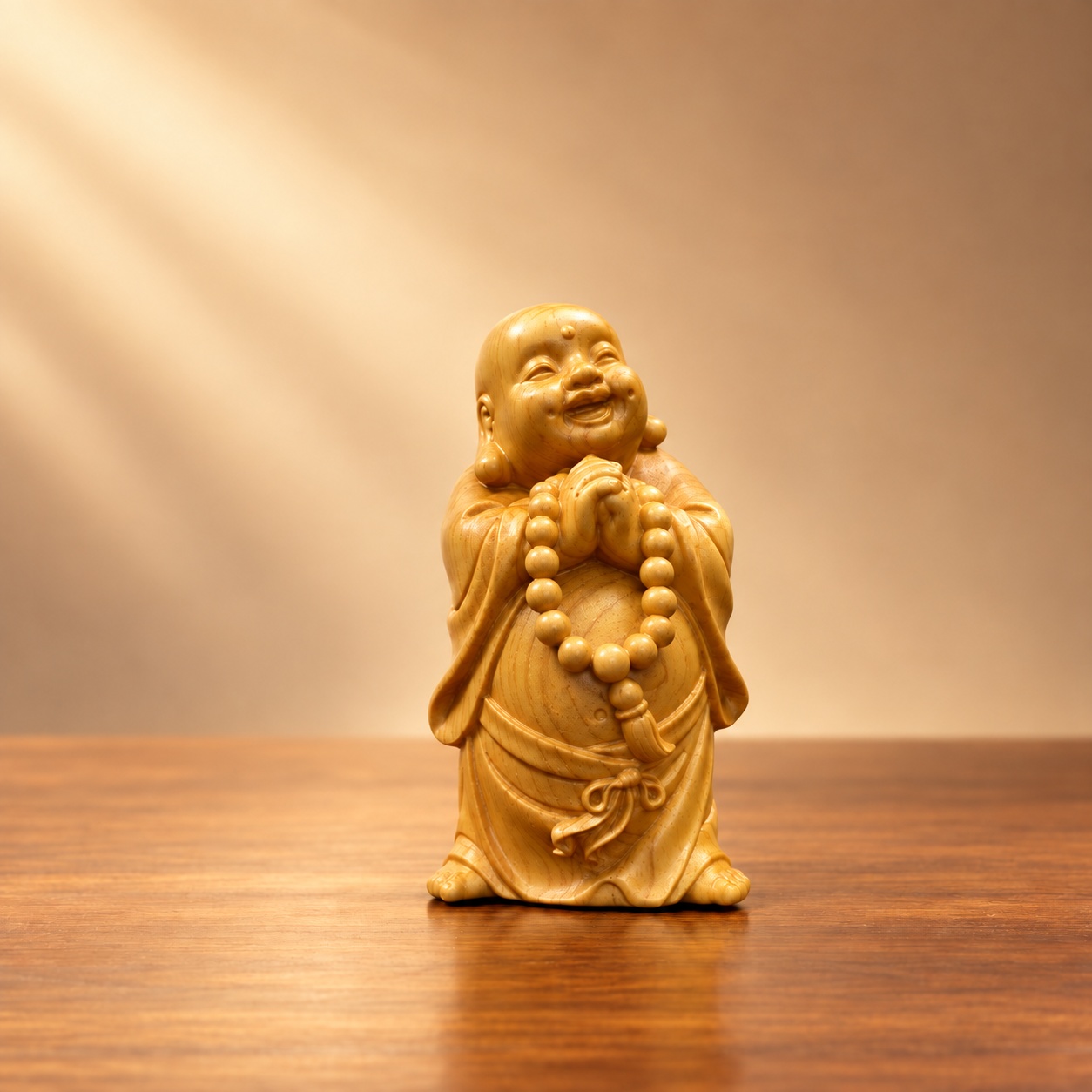
If a small wood carving fits your own beliefs and preference for the room, our Mini Cypress Wood Laughing Buddha with Beads brings a warm honey-coloured detail in an approximately 8 × 4 × 4 cm format. The standing figure’s joined hands and carved bead loop reward a close look without needing a broad display surface.
4. Decide where a religious or symbolic figure belongs
Traditions and households differ on placing Buddhist imagery in a bedroom. If you follow a religious practice or family custom, let that guide you. There is no need to put a Buddha figure beside the bed to create a considered room.
An adjacent study, dressing-area shelf or quiet sitting corner may be a more comfortable place for a meaningful object. Our Pale Opalite Laughing Buddha is a miniature indoor carving in man-made opalite, with supplier-stated dimensions around 38 × 36 × 22–25 mm. Its pale appearance offers a different visual choice from wood; it is not presented as a required feng shui remedy.
5. Review mirrors and light in context
Mirror advice is a good example of differing schools. Cho notes that some approaches use a mirror to help with a difficult command position, while others advise differently about mirrors facing a bed. Avoid treating conflicting online rules as one system you must satisfy at once.
For practical comfort, look at what the mirror reflects from your usual position: bright windows, a glowing screen or a busy storage area. Adjust its placement around how you use the room. Choose lamps you can operate conveniently, and keep ornament positions clear of switches and charging points.
6. Choose a palette you already enjoy
Begin with large surfaces—the wall, bedding and curtains—before buying small accents. Try a sample in morning and evening light. A soft colour in a catalogue can look different beside your flooring or under a warm lamp.
Natural wood, a pale object or a small metal detail can contribute to a balanced-looking arrangement, but more objects do not automatically make a room more harmonious. Our feng shui colours guide explores traditional associations, and zen bedroom decor focuses on a pared-back decorating approach.
A bedroom checklist you can use today
- Check bed and door sightlines before adding decor.
- Keep walking routes and drawer openings usable.
- Give bedside items a clear purpose.
- Use one consistent feng shui approach if following a tradition.
- Place symbolic figures where your household feels comfortable with them.
- Try the arrangement in daily life before adding more.
Which direction should the bed face?
This guide uses position within the room, not a universal compass prescription. Compass-based approaches need their own method and accurate room information.
Do I need a statue for bedroom feng shui?
No. Begin with layout and daily use. A personal object is optional and should suit your beliefs, taste and available space.
Practitioner references: Anjie Cho: feng shui for your bedroom; her discussion of bedroom mirrors and different schools.