Opalite vs Opal: Is Opalite Man-Made, and What Are You Buying?
Published 18 October 2026 · Laughing Buddha Statue
In modern decorative jewellery and miniature carvings, opalite commonly means a man-made material with an opalescent appearance. It should not automatically be read as natural opal. The complication is that “opalite” has also been used for natural common opal, so a clear listing should state what the particular object is made from.
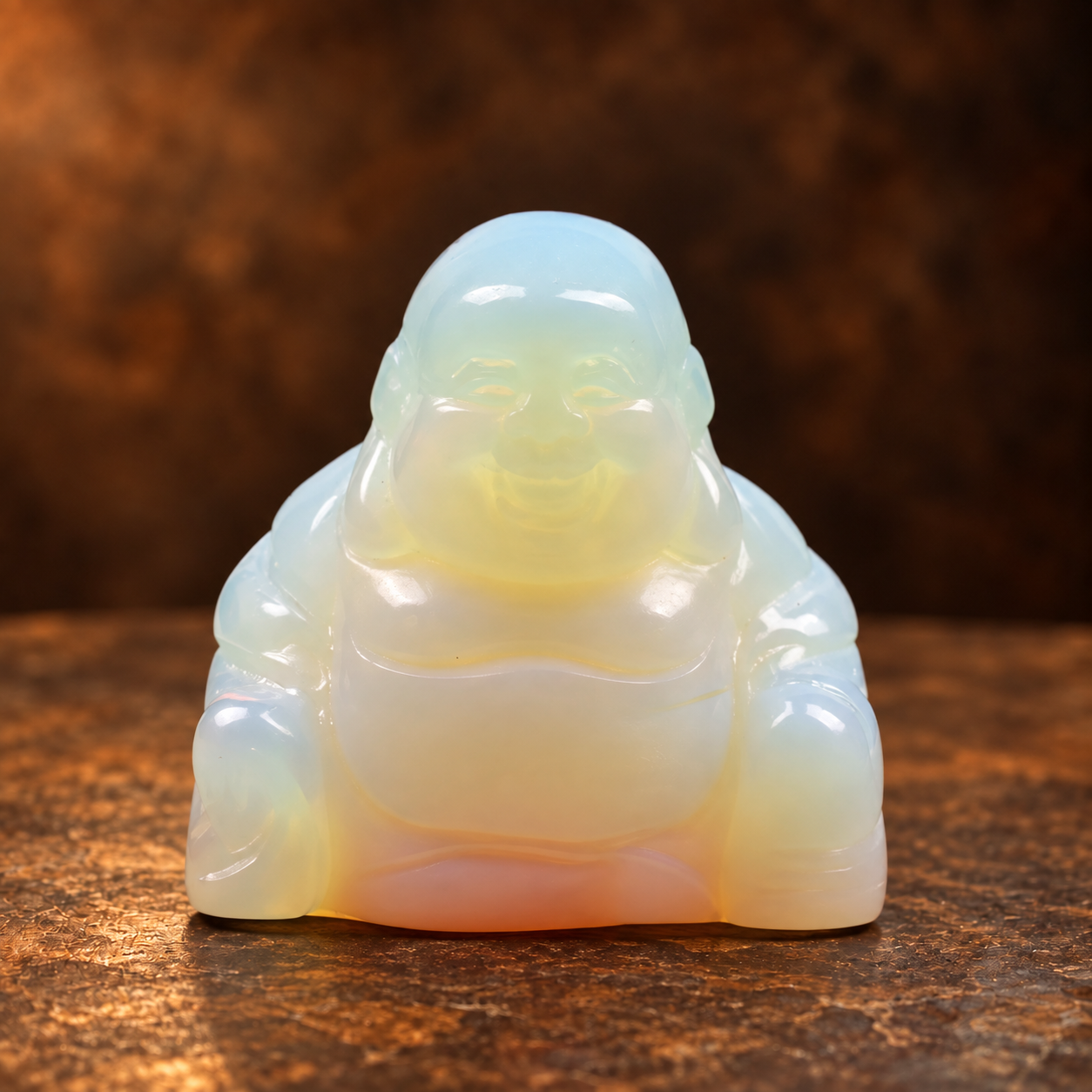
Our Pale Opalite Laughing Buddha is explicitly offered as man-made opalite. Choosing it is a choice of soft colour, small scale and a smiling carving—not a purchase described as natural opal or jade.
Three terms worth separating
| Term | How to approach it |
|---|---|
| Natural opal | A natural material; ask for the exact description and any relevant treatment information |
| Synthetic opal | A manufactured material with the defining properties of opal; different from a simple look-alike |
| Man-made opalite | A trade name used for opal-like materials; ask what the seller means rather than assuming composition |
Geology.com explains the varied use of the opalite name, including glass and other manufactured look-alikes. Gemstones.com describes the familiar opalescent-glass use. Neither a trade name nor a photograph is a complete material report for an individual object.
Is opalite man-made?
Often, yes, in the kind of small giftware discussed here. The most useful answer is the product’s own disclosure. If a seller says only “opalite crystal” without explaining origin or composition, ask for clarification. “Crystal,” “stone” and “opal-like” are not interchangeable guarantees.
A manufactured ornament can be a lovely choice when it is described accurately. You can appreciate its pale translucence without expecting the rarity or properties of a natural gemstone. Clear language helps you buy for the effect you actually want.
What the pale finish looks like in a room
Our Pale Opalite Laughing Buddha has a milky white-blue appearance that can show warmer hues as the lighting and background change. Its supplier-stated dimensions are approximately 38 × 36 × 22–25 mm, with small variation. It is a miniature seated figure intended for indoor decorative use.
That scale suits a nearby shelf, a personal corner or a small gift. Put it against the background where you intend to enjoy it: a dark book cover, pale shelf and warm wood can give the same translucent-looking piece a different visual presence. The effect is part of styling, not a way to verify material identity.
When a green carving might suit you better
If you prefer a more visibly green accent, our Green Aventurine Laughing Buddha offers a similar miniature seated format in supplier-identified aventurine. Compare the two for colour and material preference rather than assuming the pale piece is more valuable because it resembles opal.
These two pieces also show why product names should be read carefully. Aventurine is not jade, and our opalite piece is not presented as natural opal. The joy of choosing a carving can sit alongside straightforward, accurate material information.
A simple buying checklist
- Find the explicit material disclosure, not just the headline name.
- Check whether “man-made,” “natural,” “synthetic” or “imitation” is stated.
- Read the dimensions and allow for the listed variation.
- Review the full-front photograph, then the detail view.
- Choose a stable display spot appropriate to a miniature ornament.
If the material is the main reason for a significant purchase, request appropriate documentation before ordering. For a small decorative gift, an accurate product description still matters: pass that description on rather than calling it a natural gemstone.
Care and everyday use
Follow the instructions supplied for the actual object. Our opalite Budai listing recommends gentle dusting with a soft cloth. Keep it protected from knocks and avoid using household chemicals to test what it is. A display surface where you can reach it easily makes regular care simpler.
Does opalite have a fixed spiritual meaning?
People can attach personal meanings to a colour or object. That is different from a verified material property. Choose the carving as a reminder you enjoy, rather than expecting a promised physical or emotional outcome.
Is every object called opalite the same?
No. The name has multiple uses. Read the exact disclosure for the piece you are considering.
For another material comparison, see aventurine vs jade. For the figure itself, read Laughing Buddha meaning.
Further reading: Geology.com: opalite and opal; Gemstones.com: opalite material guide.