Chinese Good Luck Symbols: What They Mean in Art, Gifts and Home Decor
Chinese good luck symbols often turn a wish into an image. An animal, a fruit or a decorative object may carry a meaning through its name, a story or a familiar visual association. Learning that connection helps you appreciate the design and explain a gift with more care.
Why a name can matter as much as a shape
Chinese auspicious imagery includes visual wordplay. A depicted object can suggest a similarly pronounced word, letting the design express a wish without spelling out a sentence. Other motifs draw on longstanding stories or ritual associations.
Context still matters. A museum object made for an imperial celebration, a wedding decoration and a contemporary home ornament do not necessarily use a motif in exactly the same way. Start with the documented meaning, then read the rest of the design.
Fish: abundance and surplus
The National Museum of Asian Art explains that yu, fish, sounds like the word for abundance. Fish imagery can therefore express a wish for plenty. Its interpretation of a dish decorated with lotus and fish identifies a further wordplay suggesting continuing abundance.
If you enjoy a sculpture that rewards a closer look, our Laughing Buddha with Fish Pair brings fish imagery into a Budai design. Two fish form the scene beneath the standing figure, alongside coins and flowing robes. The bronze-colored surface is a finish on resin, and the approximately 9.06-inch height gives the piece more presence than a miniature.
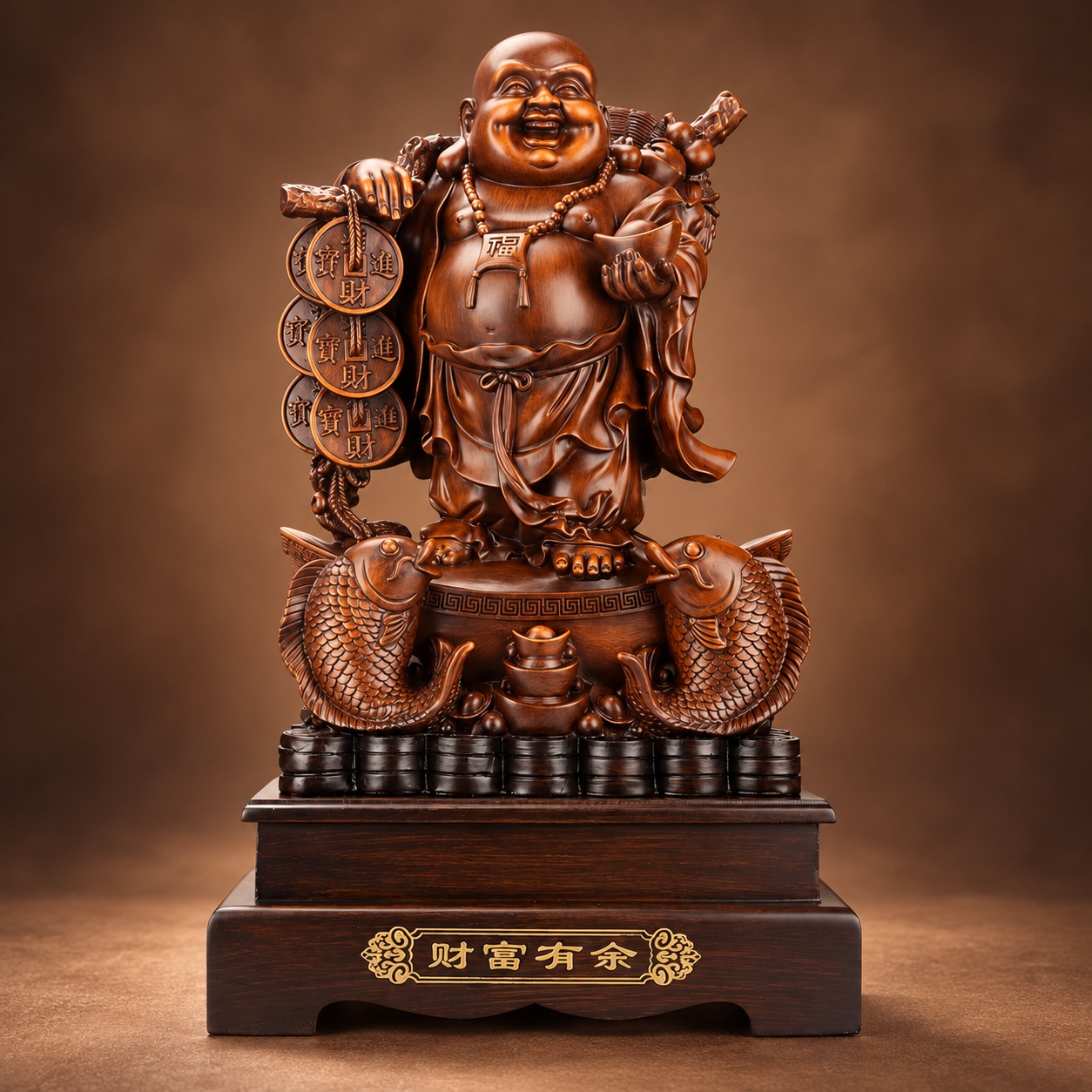
Think about where the full composition will be seen. The listed base is approximately 5.91 inches wide and 3.94 inches deep. A clear shelf or console lets the fish remain visible instead of disappearing behind nearby objects.
Ruyi: a wish that things go as hoped
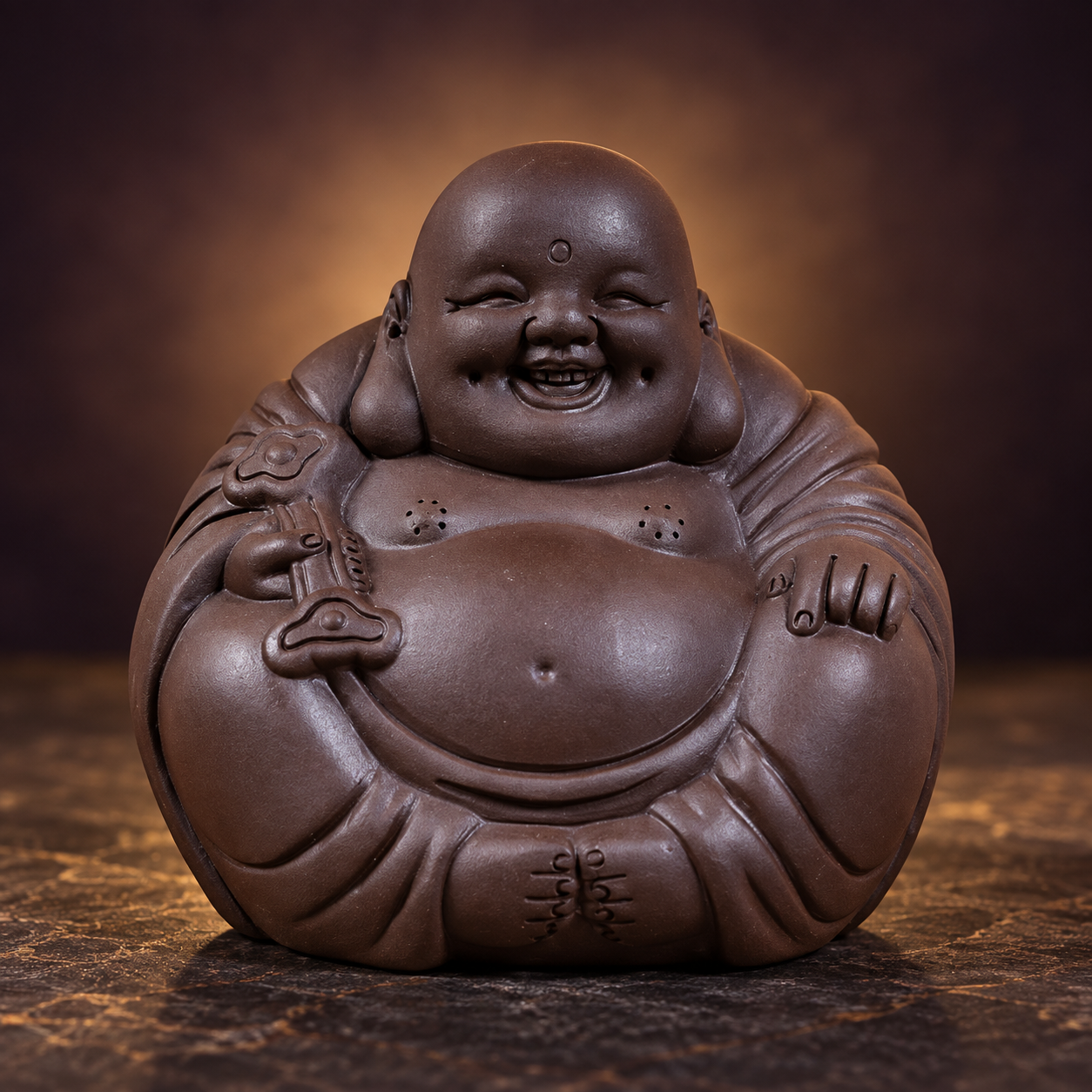
Ruyi means “as you wish.” The Smithsonian’s interpretation of a decorative ruyi scepter connects the object with good wishes. On a statue, the scepter adds a recognizable motif to the figure holding it.
Our Ceramic Laughing Buddha with Ruyi is a quieter example. The scepter lies across Budai’s chest, so you can enjoy the detail without a large, elaborate base. Its approximately 2.95-inch height makes it easy to picture among books or on a small table.
Bats and peaches: read the combination
Bats and peaches may be surprising motifs to an unfamiliar viewer. The museum’s ruyi record identifies them as emblems of good fortune and immortality in Chinese lore. Such a design is easier to understand once you recognize that the animals and fruit carry symbolic roles.
Look for an explanation of the full pattern instead of assigning meaning based only on a modern association. An object decorated with multiple motifs may form a more specific wish than any single detail suggests.
Double happiness: recognize the written motif
The doubled character commonly called “double happiness” is a written design, distinct from a smiling figure or animal motif. The Met’s collection includes a vase combining that character with bats and peaches, showing how written and pictorial elements can appear together.
If you are choosing a gift featuring Chinese characters, confirm which characters are actually shown and what occasion the design is intended for. A clear seller description is more useful than a broad label such as “Chinese lucky writing.”
Budai: the person within the design
The Laughing Buddha is a figure, not just an interchangeable symbol. Budai’s identity matters even when the sculpture also includes fish, a bag or a scepter. Our guide to Budai’s meaning explains that identity in more detail; the guide to poses and objects then helps you compare specific designs.
Choose a motif that suits your message
For a new chapter, you might prefer a ruyi’s good-wishes association. Someone who enjoys rich visual detail may appreciate a fish composition. The recipient’s connection to the design should remain the deciding factor.
Keep your note simple: “I chose the fish detail as a wish for a plentiful, happy chapter,” or “The ruyi felt like a lovely way to say I hope things go as you wish.” These messages explain your intention while leaving room for the recipient’s own interpretation.
Before choosing, check the figure, the specific motif, the stated material and the measurements. That combination gives you both a meaningful story and a piece that fits comfortably into everyday life.
Continue exploring symbols often sold for feng shui and symbols of happiness for home and gifts when you are ready for the next decision.