Buddhist Symbols and Meanings: A Guide to Recognizing Traditional Motifs
A wheel, a knotted line or a lotus on an object can invite a closer look. Buddhist symbols carry meaning through their shape and context, but one short label rarely explains the whole design. The tradition, the object and the symbols around it all matter.
This guide introduces a familiar group of eight auspicious symbols and a practical way to identify what you are seeing. It also explains why a smiling Budai figure belongs to a different question from a wheel or knot on a textile.
Start with the object, then the symbol
Look at the whole piece before searching for a meaning. Is the motif embroidered on fabric, painted beside a figure or repeated around a vessel? Is there a label identifying the region, tradition or artist? Those details are more useful than a resemblance to a small online icon.
Write a plain description of the visible form: a circular wheel with spokes, two fish facing one another, or a continuous interlaced line. Describing what you can see helps separate identification from interpretation. If the design is unclear, keep the identification tentative rather than assigning a confident meaning.
The eight auspicious Buddhist symbols
Himalayan Art Resources identifies the following eight symbols, which may appear individually or together. The brief meanings below summarize interpretations explained in Lama Zopa Rinpoche’s teaching published by FPMT. These are religious interpretations within that tradition, rather than promises about what an object will do.
- Parasol: a sheltering canopy, associated with protection from suffering.
- Golden fish: a pair of fish, associated with freedom from fear in the ocean of suffering.
- Treasure vase: a rounded vessel, associated with abundance and fulfillment.
- Lotus: a blossom, associated with purity and freedom from harmful actions.
- Right-turning conch: a shell, associated with the sound of the Dharma awakening understanding.
- Endless knot: an interwoven continuous form, associated with the connection of wisdom and method.
- Victory banner: a standard, associated with overcoming obstacles to the teachings.
- Dharma wheel: a wheel, associated with the continuing teaching of the Dharma.
The names and explanations are a starting point for reading an object. For a sacred piece used in practice, seek guidance from the relevant teacher or community. A museum label can help with art-historical identification; a practitioner can explain how a particular object is used.
How to recognize a motif without guessing
Compare several views where possible. A stylized vase can resemble a decorative jar, and a tightly drawn knot can be difficult to follow at a small scale. Use the full photograph and the seller’s description together. A clear close-up is more useful than an attractive room photograph for identifying tiny details.
Check whether the seller names the motif or merely uses a broad phrase such as “Buddhist style.” If identification matters to your purchase, ask for the name and a closer view before deciding. The same applies to gifts: avoid attaching a specific religious explanation to a motif you have not identified.
Symbols, hand gestures and figures answer different questions
A symbolic emblem is one part of a visual design. Identifying a statue involves looking at the figure, pose and objects it holds. Our Buddha statue meanings guide explores those questions separately. The lotus guide goes further into that particular motif.
This distinction makes shopping descriptions easier to read. The name of a figure does not establish that every surrounding detail belongs to the eight-symbol group. Equally, a lotus on an object does not identify every figure or tradition depicted beside it.
Reading a meaningful detail on a Budai statue
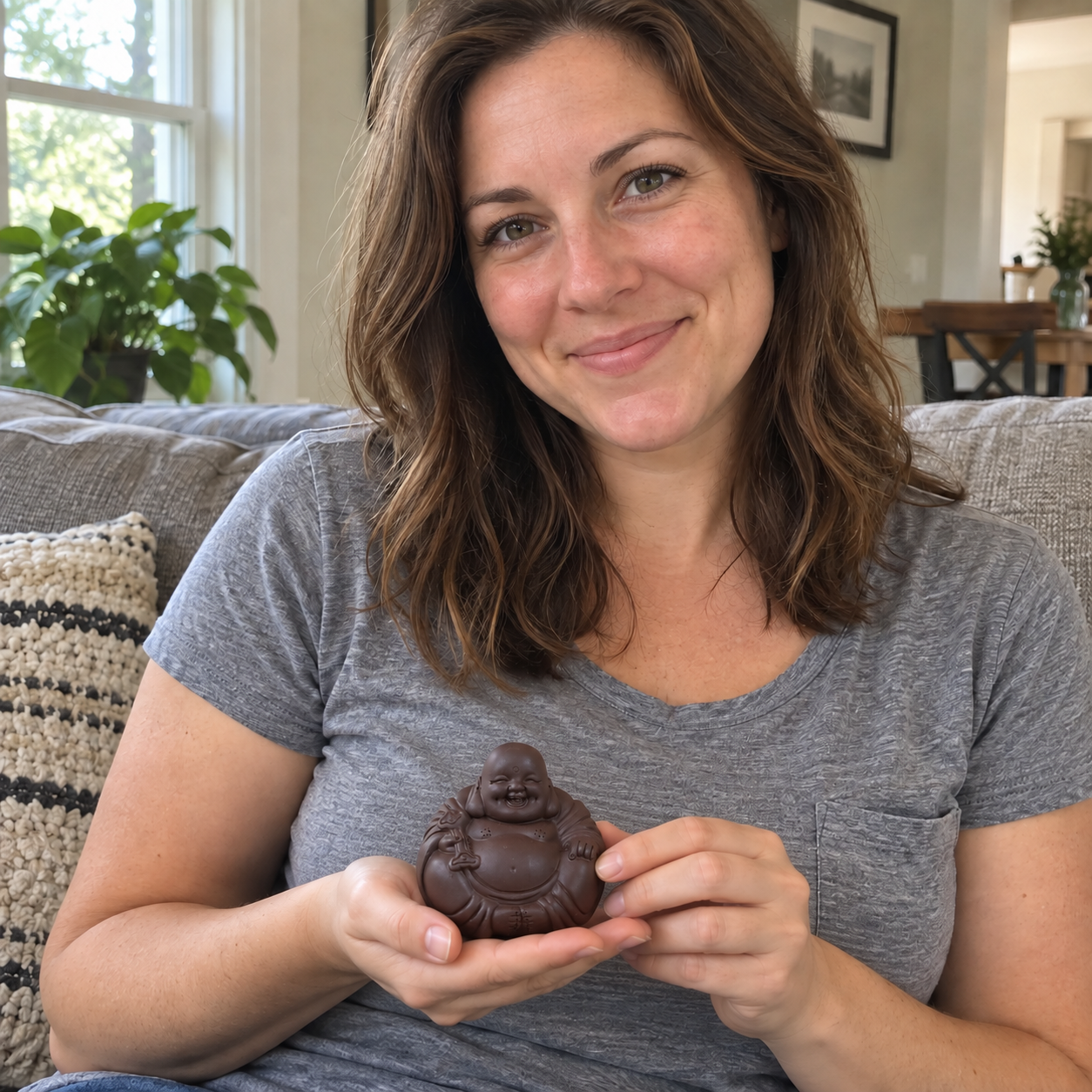
For a home keepsake, you may be drawn to an identifiable figure and the wish expressed by one detail. Our Ceramic Laughing Buddha with Ruyi shows Budai holding a ruyi scepter across his chest. The ruyi is traditionally associated with the wish that things go as hoped; it is a separate motif from the eight emblems listed above.
The dark-brown ceramic figure is approximately 2.95 inches high. Its appeal lies in the combination of the smile, the clearly described object and a compact form for a stable indoor shelf. If that particular wish feels personal, it gives you a specific reason to choose the piece without assigning it a religious function it was not sold to serve.
Choose a gift with the recipient’s context in mind
Ask whether the recipient wants an object for religious practice, an artwork or a personal keepsake. These are different uses, and understanding the intended use helps you choose appropriately. For a practice object, their tradition and preferences should lead the decision.
For a keepsake, a short accurate note often means more than a long list of claimed benefits. Name the figure or motif, explain the wish you want to express, and let the recipient decide what the object means in their space.
Are all Buddhist symbols used in the same way?
No single introductory list covers every tradition or every object. Use this guide to begin identifying familiar motifs, then follow the provenance and context of the piece you are examining. The most helpful next step may be reading a museum record or asking a knowledgeable community member, rather than buying another object.
Further reading: Himalayan Art Resources: eight auspicious symbols; FPMT: traditional explanations of the eight signs.