Lotus Flower Meaning in Buddhism: Understanding the Lotus Base
A lotus pedestal is more than a decorative outline beneath a figure. In Buddhist art, the flower carries associations with purity and enlightenment. To understand a statue with a lotus base, look at both the flower and the figure it supports.
Why is the lotus associated with purity?
The Metropolitan Museum of Art explains the lotus as a Buddhist symbol of purity because it grows from mud while its flower remains unsoiled. This image provides a way to express spiritual purity through a familiar feature of the natural world.
The museum also connects lotus imagery with enlightenment in its interpretation of a Japanese Buddhist altar cloth. These meanings help explain why petals appear in religious textiles and sculpture, not only in paintings of flowers.
Recognize a lotus base
A carved lotus pedestal often shows a ring or several layers of petals beneath the seated or standing figure. The petals may be rounded, pointed or highly stylized. On a small retail ornament, the outline can be simplified so the overall form is easier to cast or carve.
Look at the full base in the photographs. A textured platform is not automatically a lotus, and a listing should identify the detail clearly. Consider whether you want a prominent pedestal or a quieter silhouette when comparing designs.
The pedestal does not identify the figure by itself
Different figures in Buddhist art can appear with lotus imagery. The base alone does not tell you the figure’s name, tradition or precise religious role. Hands, posture, clothing, accompanying objects and the object’s documented identification all matter.
Our guide to identifying Buddha statues walks through that distinction. Begin with who is represented, then read the attributes and pedestal as additional layers.
A modern decorative example
Our Copper Laughing Buddha on Lotus Base combines Budai’s smiling face and rounded form with a layered lotus pedestal. Its listing identifies copper, an antique copper appearance and an approximate height of 4.33 inches. The petals add detail to the silhouette beneath the robe and beads.
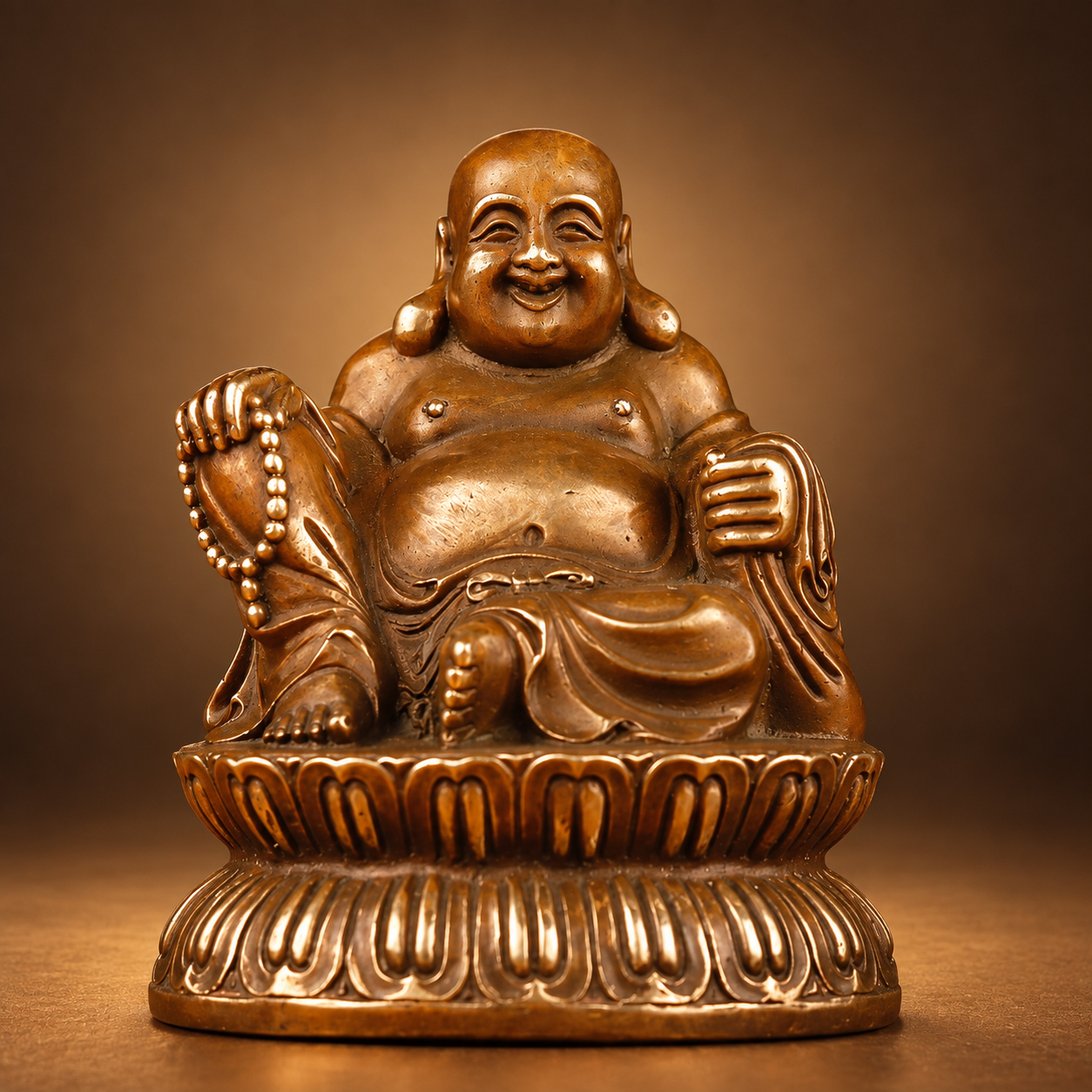
This is a modern decorative design from our collection, rather than a historical museum object. The lotus’s wider symbolism can help you understand the motif, while the Laughing Buddha meaning guide explains Budai’s identity. Neither the pedestal nor the finish makes the piece a substitute for guidance within a religious practice.
What about lotus colors?
You may encounter charts assigning a separate meaning to every lotus color. Those charts often combine different traditions, modern interpretations and decorative choices. Read a specific artwork’s explanation before applying a color association to it.
On a retail statue, a gold-colored or antique copper finish may cover both the figure and its base. That surface treatment describes the object’s appearance. It should not automatically be read as the color of a living lotus flower or as proof of a particular religious meaning.
Choose the design you can appreciate
If the lotus form is what attracts you, compare how clearly the petals are shown and how much space the base takes up. Measure width and depth as well as height. A substantial pedestal may need a different shelf from a small figure with a plain base.
Keep the display stable and easy to maintain. For traditional religious use, seek guidance from the community whose practice you follow. For a personal decorative display, understand the image and choose a place where you can enjoy its details respectfully.
Our ruyi guide explains another motif often combined with lotus pedestals, while the Budai design guide compares different attributes. Reading one detail at a time helps you choose an object for a story you understand, rather than for a label alone.