Ruyi Meaning: The “As You Wish” Symbol in Art and Gifts
The curved object held by a Laughing Buddha may be the detail that gives a statue its particular message. A ruyi is a scepter associated with good wishes. Understanding that object helps you read the design more carefully, instead of treating every smiling figure as the same ornament.
What does ruyi mean?
The National Museum of Asian Art explains ruyi as “as you wish.” Its collection includes a decorative scepter presented to the Qianlong emperor in 1783. The museum describes such scepters as symbols of good wishes.
That gives you a clear starting point for a gift: a ruyi can express the hope that things go as the recipient wishes. It is a symbolic message carried by an object, rather than evidence that the object will produce an outcome.
Recognize the object in the design
Look for the scepter rather than relying on the listing’s title alone. In many decorative examples it has a curved shaft and a broad, shaped head. The head may resemble a cloud or fungus form; the exact carving and proportions vary.
A figure may hold it across the chest, alongside the body or above a pedestal. Read the product photographs and description together. A stylized fan, ingot or staff can look different from the object you expected when seen at a small scale.
Separate the figure from the attribute
On a modern Laughing Buddha design, Budai is the smiling monk with a rounded exposed belly and loosely worn robe. The ruyi is an additional attribute. It adds a good-wishes theme without turning Budai into a different Buddhist figure.
If you are still identifying the sculpture itself, our Buddha statue meanings guide starts with that question. Our guide to Budai designs then helps compare the objects he carries.
A simple example you can read closely
Our Ceramic Laughing Buddha with Ruyi holds the scepter across his chest. Its dark-brown ceramic finish makes the design feel understated, while the rounded face and robe identify the figure. At approximately 2.95 inches high, it is small enough to appreciate the details up close on a shelf or desk.
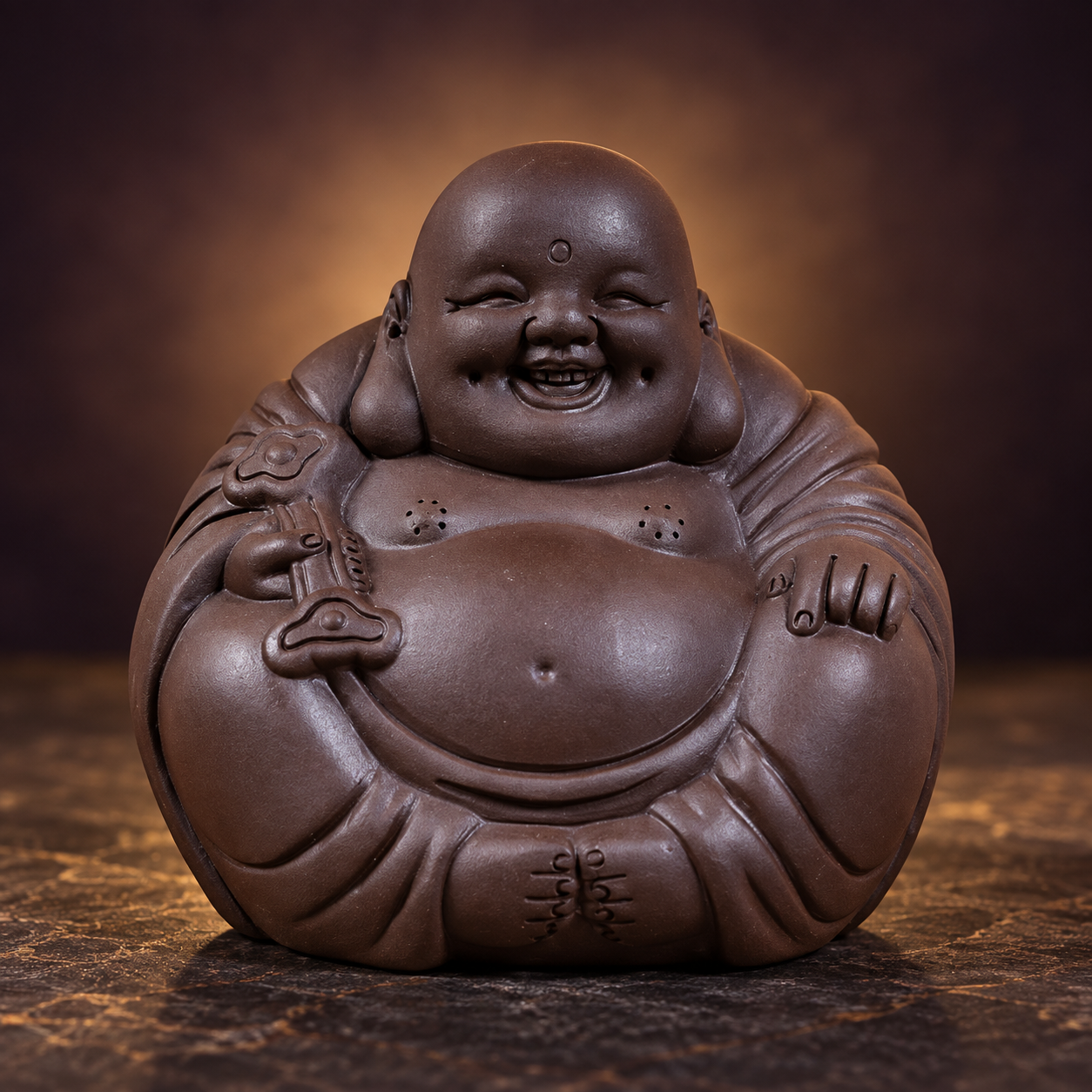
Choose this kind of piece when the recipient likes a quiet ceramic accent and the good-wishes message suits your relationship. The motif can be the reason for the gift, without needing to make every other detail of the sculpture into a separate promise.
When several motifs appear together
Our Copper Laughing Buddha with Ruyi on Lotus brings the scepter together with bead detail and a layered lotus pedestal. The listing identifies copper with a gold-colored finish and an approximate height of 4.72 inches. That is a different visual presence from the smaller ceramic example.
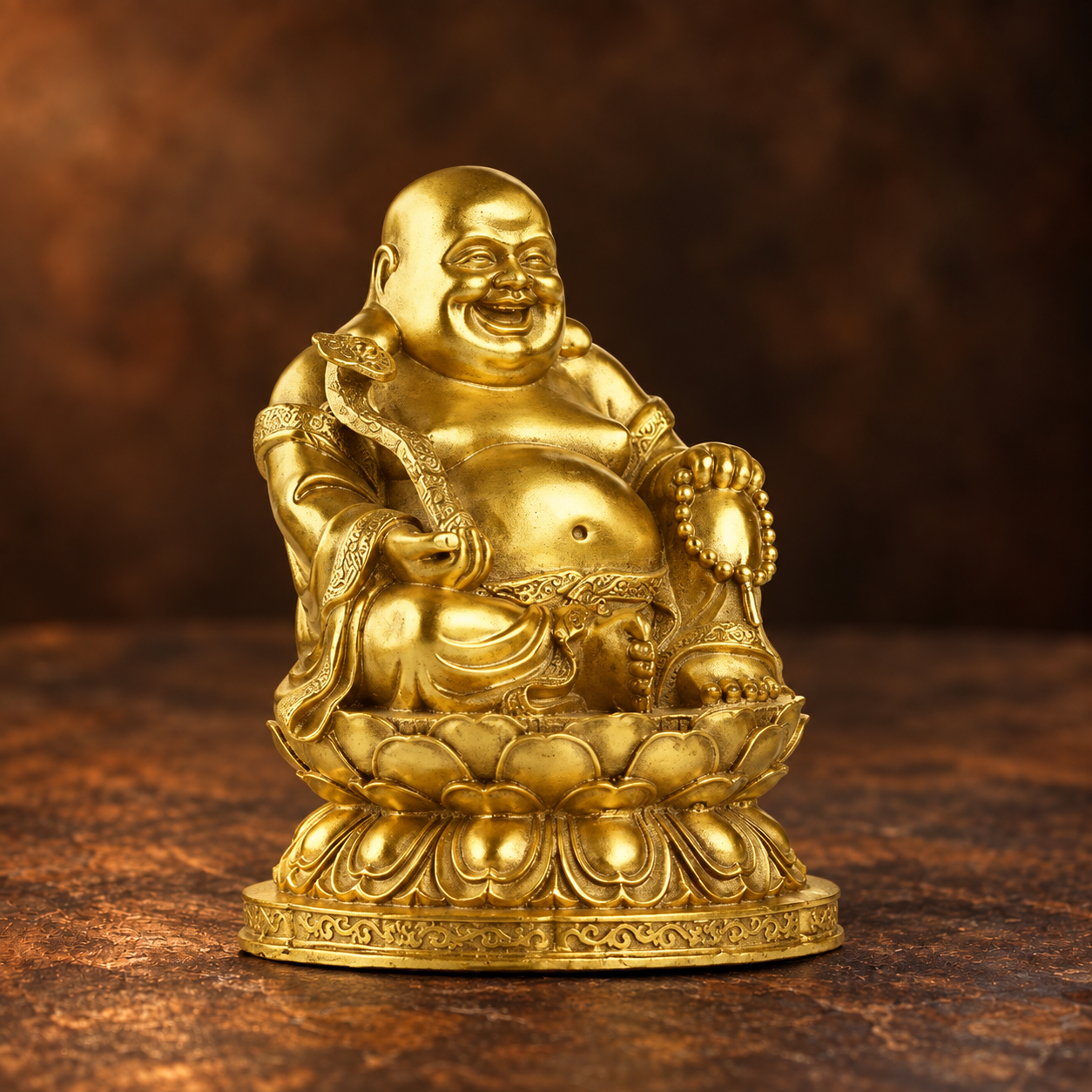
Read those details individually. The lotus has its own history in Buddhist art, explored in our lotus meaning guide. The metal and finish describe the physical object; they do not change the basic translation of ruyi.
Give the wish a personal voice
A short note can say more than a long explanation: “May this next chapter unfold as you hope,” or “A small wish for the plans you are making your own.” Choose words that match the person and the occasion.
For seasonal giving, our Chinese New Year gift guide considers family customs and recipient preferences. If the piece is for your own home, check dimensions and the stability of the intended surface before choosing. Knowing the motif makes the decision more specific: you can enjoy the sculpture for its design and understand the wish it carries.